Dvele Site Prep & Utilities: The San Jose Owner’s Guide
Site prep and utility rough-in for a Dvele home in San Jose typically runs $18,000 to $45,000 installed, depending on trench length, soil conditions, and how far your panel and water lateral sit from the street. We stock the conduit bodies, grounding hardware, backflow preventers, and weatherheads that Dvele’s foundation and utility specs call for, and we can usually start within two weeks of your site survey. Most San Jose owners discover a problem when the trench inspection fails, the water pressure drops after the main is tied in, or the Dvele delivery crew flags a utility stub that’s out of position by a few inches.
We’re an independent service provider, not affiliated with Dvele. We work on their homes because the platform is well engineered, but site prep is site prep: the trench, the meter, the panel feed, the water lateral. That work happens before the modules arrive and it has to be right.
Key Takeaways
- Dvele site prep in San Jose typically costs $18,000 – $45,000 installed, with trenching and utility stubs as the biggest variables.
- Failed inspections and stub misalignment are the two most common reasons owners call us after another contractor walked.
- We provide written pricing before work starts and a one-year written guarantee on everything we install.
- Fielding ADU San Jose stocks the common Dvele-spec utility hardware so you’re not waiting on a backordered part.
Which Dvele Models This Applies To
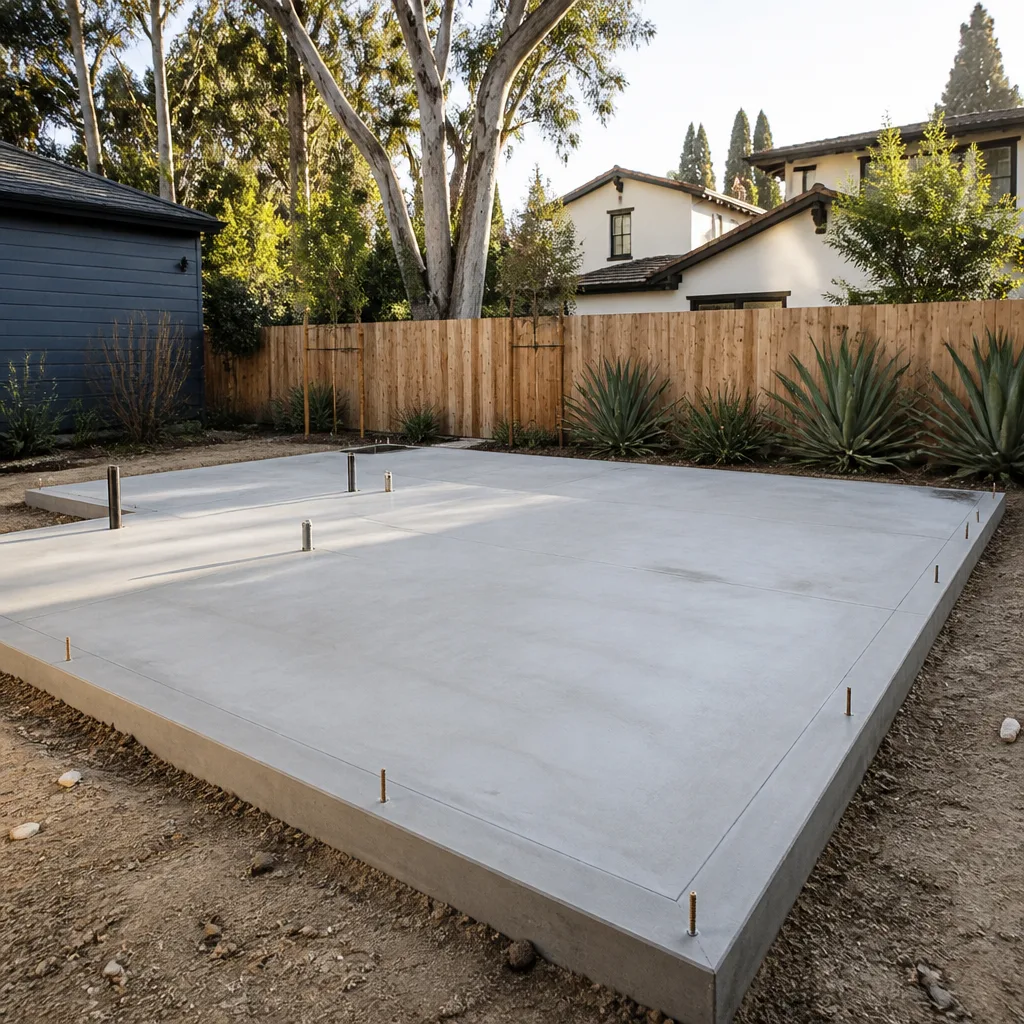
Dvele builds a handful of standard chassis widths, and the utility requirements follow the chassis, not the floor plan name. The current lineup includes the Dvele IQ series and the Adapt series, but the part that matters for site prep isn’t the model name. It’s the electrical service size stamped on your foundation plan, the water main diameter called out in the approved plan set, and the sewer lateral depth at the property line. Most Dvele units in San Jose spec a 200-amp service and a 1-inch water meter, but we’ve roughed in units that required 400-amp panels and 1.5-inch meters when the lot had enough solar and battery capacity to justify it.
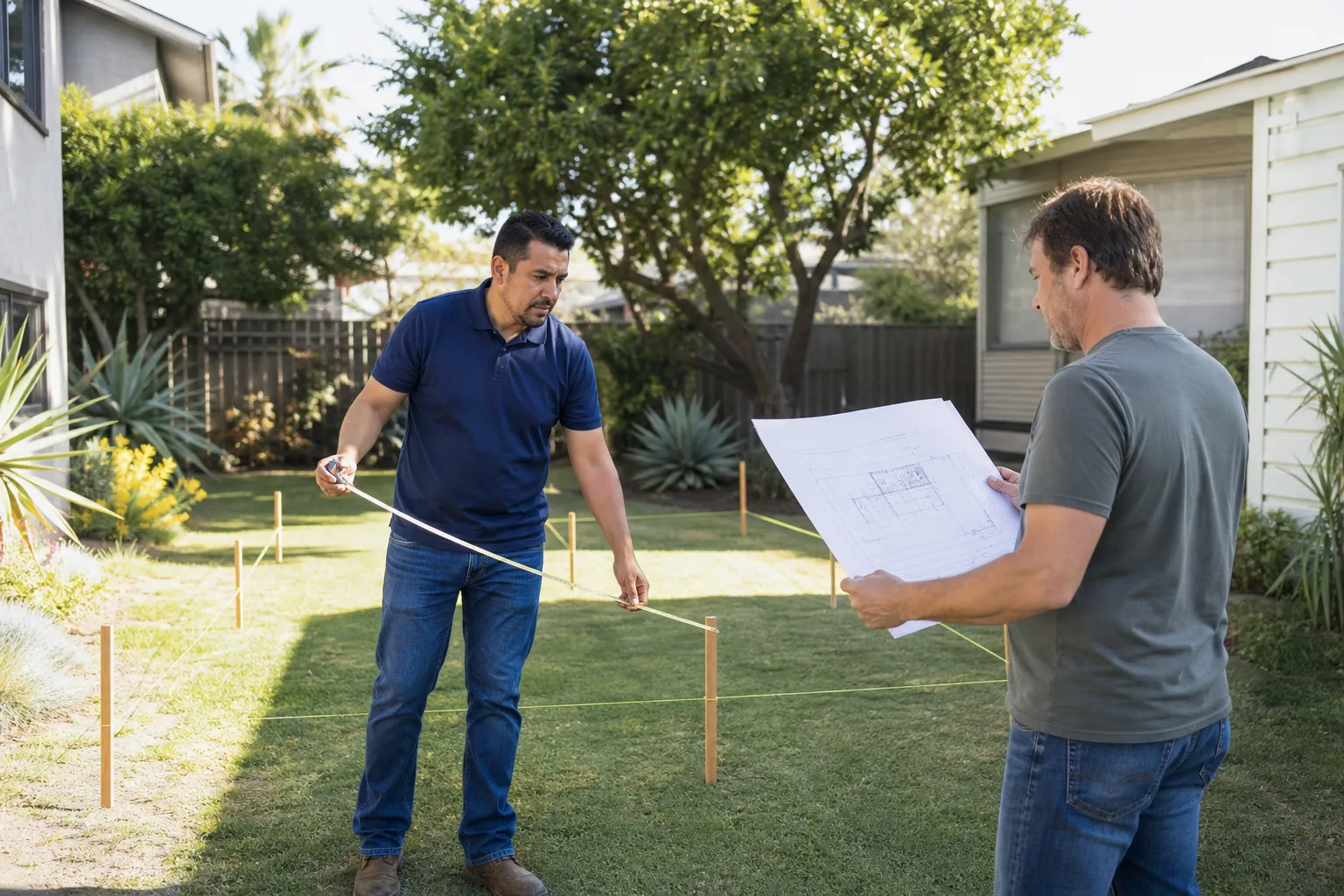
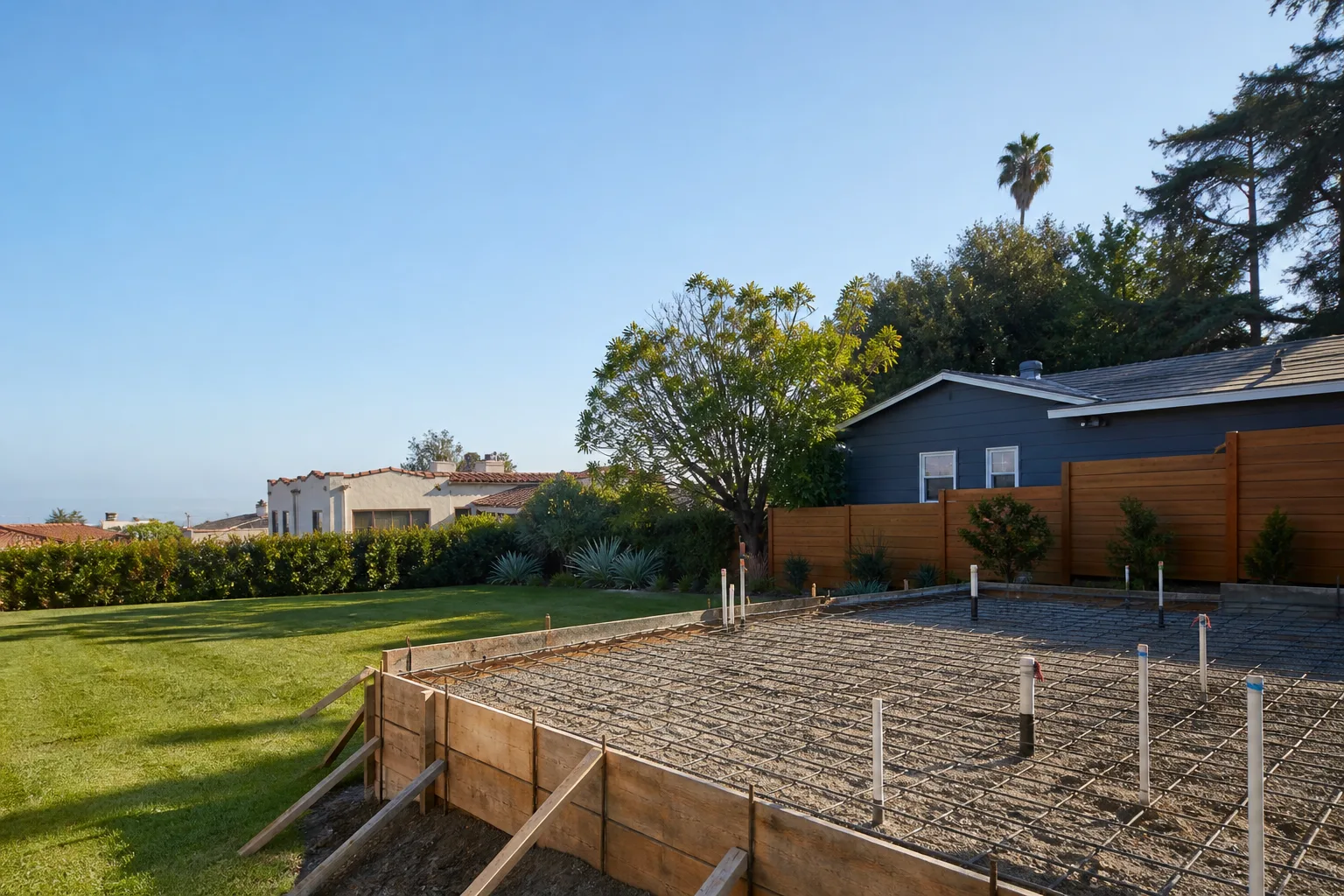
Here’s the compatibility gotcha we see on Dvele jobs in San Jose: Dvele’s utility stub tolerances are tighter than a conventional stick-frame ADU. Where a normal build gives you a couple inches of grace on conduit placement, Dvele’s factory-installed chase and panel locations expect the underground feeders to land within a half inch of the plan dimension. If your last contractor eyeballed the trench and called it good, the delivery crew will flag it and the crane day gets pushed. We measure from the property corner, stake the stubs, and verify against the Dvele foundation drawing before we backfill.
For OEM vs. aftermarket, the utility side doesn’t have much “Dvele-branded” hardware. What matters is spec compliance: Type USE-2 aluminum or copper feeders sized to the panel, schedule 40 conduit below grade, a listed meter main that San Jose’s building department and PG&E will both accept. We stock Eaton and Square D meter mains because those clear PG&E’s service requirements without a fight. The water side uses a standard double-check backflow preventer, which we install above grade with enough clearance to satisfy the city inspector and the cross-connection tester. Where owners get burned is when a contractor subs in a cheaper single-check valve or buries a backflow below grade. It fails the San Jose inspection and costs more to redo than doing it correctly the first time.
Signs Your Dvele Site Prep & Utilities Is Failing
- Low water pressure after the main is tied in. This usually means the water lateral was undersized for the meter the city installed, or the stop valve isn’t fully open at the main. We see this most often when a handyman pulled a 3/4-inch line where the plan called for 1-inch.
- Breaker trips when the heat pump or induction range runs at full load. An undersized feeder or a loose lug in the meter main will show up exactly like this. The wire might’ve passed a rough inspection, but heat and load expose a marginal connection in the first month.
- The PG&E panel or meter main fails final inspection. Green tag refused, usually because the grounding electrode conductor doesn’t land where PG&E’s service standards require, or the meter socket has the wrong jaw tension. This pigeonholes a Dvele install fast: no meter release, no occupancy permit.
- Soggy ground or standing water along the trench path weeks after backfill. That’s a sign the water lateral or sewer lateral was nicked during excavation and the leak is slow enough not to surface immediately. On a Dvele job where the modules are already set, cutting out that section is painful.
- A Dvele representative flags a stub location during the pre-crane inspection. The utility chase under the home doesn’t line up with the stub you pulled. If this happens, the crane is on you to fix it fast, and a three-inch miss is the difference between a same-week correction and rescheduling your delivery window.
Replacement Cost & What’s Included
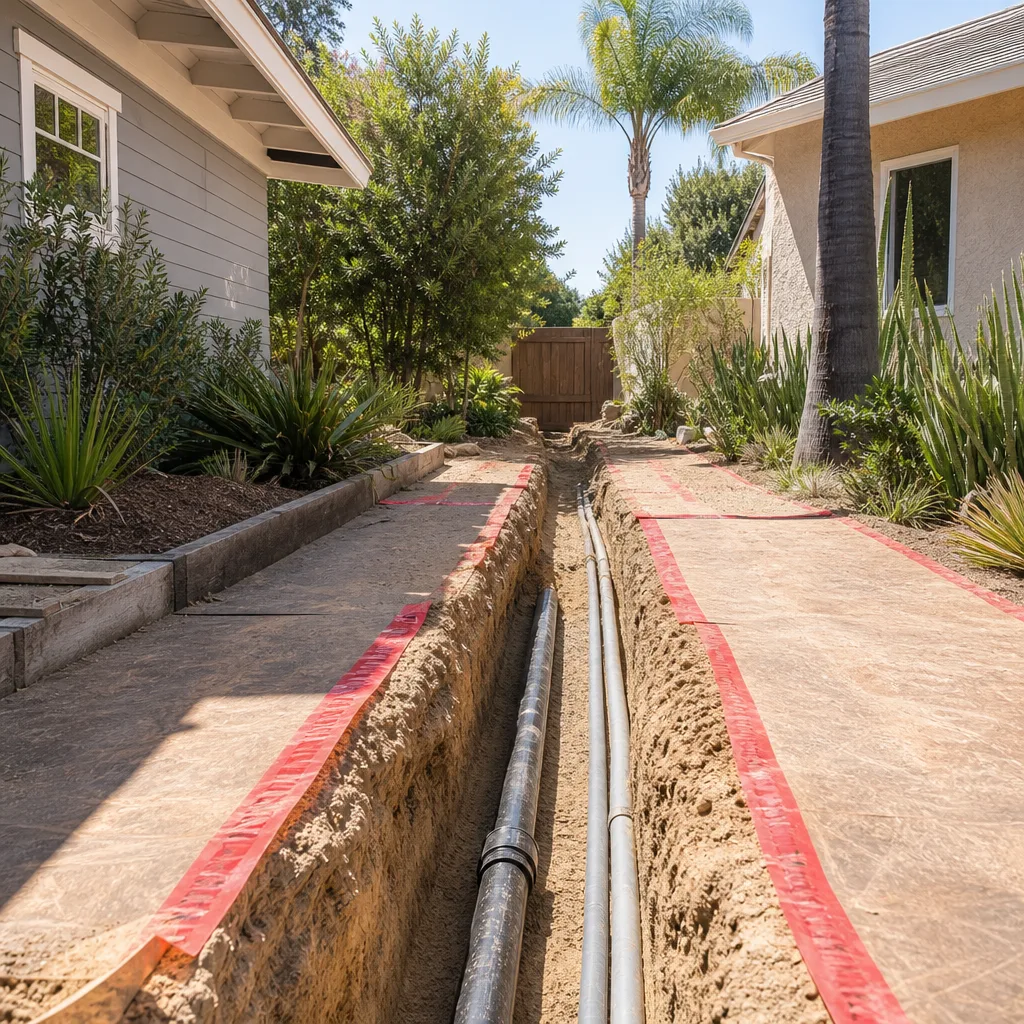
For a full site prep and utility rough-in on a Dvele unit in San Jose, figure $18,000 to $45,000. That’s the installed range, before permit fees and PG&E service charges. At the low end, you’ve got a short trench from the street, soft soil, a nearby panel location, and no retaining walls to pour. At the high end, you’re cutting through clay and rock, the electrical service is on the opposite side of the house from the water main, and the trench is longer than 80 feet.
What’s in the price: excavating, bedding material, conduit for the electrical feeders, the water lateral from the meter to the unit, the sewer lateral, the meter main panel and breakers, backflow preventer, grounding, backfill, compaction, and the stub-out verification against the Dvele plan. What’s not in the price: San Jose permit fees, PG&E service connection charges, tree removal, and any slab demo if the trench has to cross an existing patio. Every quote goes in writing before we start, and it’s a fixed number. The Garrison Standard covers the work for 365 days: if a connection fails or a stub settles out of position inside that year, we come back at no charge.
DIY or Call Us?
You can check a few things yourself. If you suspect low water pressure, read the water meter with the house valve off and watch if it registers flow. That tells you whether the leak is on your side of the meter. You can also open the meter main panel and visually check for scorched lugs or melted insulation, but don’t touch anything inside a live panel. If the water pressure issue is the city’s service, San Jose Water will tell you, but if it’s the lateral, that’s a trench repair.
Digging around buried electrical feeders or a gas line is where DIY goes wrong. In San Jose, any excavation deeper than 12 inches requires a USA North 811 ticket, and if you hit an energized conduit or a PG&E gas service, you’re now in an emergency, not a repair. The labor isn’t the expensive part of a failed excavation. It’s the hospital bill, the PG&E fine, and the repair downtime. If the utility stub is out of position, we fix it with proper shoring and compaction, not a shovel and a guess. “Put it in writing, show up on time, build it right.” Call (669) 201-3984 and we’ll send someone with a trenching plan and a quote.
FAQs
Properly installed site prep and underground utilities should last 30 to 50 years in San Jose’s climate. The parts that wear first are the backflow preventer assemblies, which need testing annually and replacement every 5 to 10 years, and the meter main breakers, which can fail after 15 to 20 years of thermal cycling. The underground conduit and water lateral, installed to spec, outlive most homeowners.
Yes, in most cases. A failing section of water lateral can be spliced with a proper compression coupling and re-bedded. A corroded meter main lug can be replaced if the panel bus isn’t damaged. But on a Dvele job where the home is already set, repairs are often more costly than replacement would have been before the modules arrived. The fix still costs less than starting over.
For a complete re-trench and re-pull on a Dvele lot in San Jose, plan on 5 to 10 working days, not counting PG&E scheduling. A targeted repair like replacing a backflow preventer or re-pulling a single conduit run is a one-day or two-day job. Inspections add time depending on the city’s current queue.
We stock the common hardware on our San Jose trucks: Eaton and Square D meter mains, 200-amp breakers, Type USE-2 feeders, double-check backflow preventers, conduit bodies, weatherheads, grounding rods, and compression couplings. If the part is unusual, we source it through our supply houses in the Bay Area, usually within 24 to 48 hours. Call (669) 201-3984 and we’ll tell you if we have it before we roll a truck.
Written by Reed Calloway, Owner, Fielding ADU San Jose at Fielding ADU San Jose, serving San Jose and nearby areas.