James Hardie Junior ADU Conversion: The San Jose Owner’s Guide
We stock and install James Hardie-compatible siding, trim, and structural components for junior ADU (JADU) conversions throughout San Jose, with typical materials and labor running $11,000 – $28,000 for a complete conversion depending on square footage and framing condition. Most owners discover a problem the same way: they pull back a corner of siding behind the old water heater and find the Hardie plank has wicked moisture and started to delaminate, or the original contractor lapped the trim wrong and the gap has been quietly feeding water into the sheathing for two years. We keep the common James Hardie profiles and trim widths on the truck so most repairs don’t wait on a supply-house run.
Key Takeaways:
- James Hardie siding and trim used in JADU conversions typically fails at the lap joints and around window penetrations first, not in the field of the panel.
- San Jose’s wet winters and summer dry heat cycle put more movement stress on Hardie lap siding than coastal California climates.
- We stock HardiePlank lap siding in 5/16″ and 7/16″ thicknesses, HardiePanel vertical siding, and HardieTrim boards in the widths most JADU builds call for.
- Every replacement we quote comes with a written price before work starts and the 365-Day Done Right Promise in writing.
Which James Hardie Models This Applies To
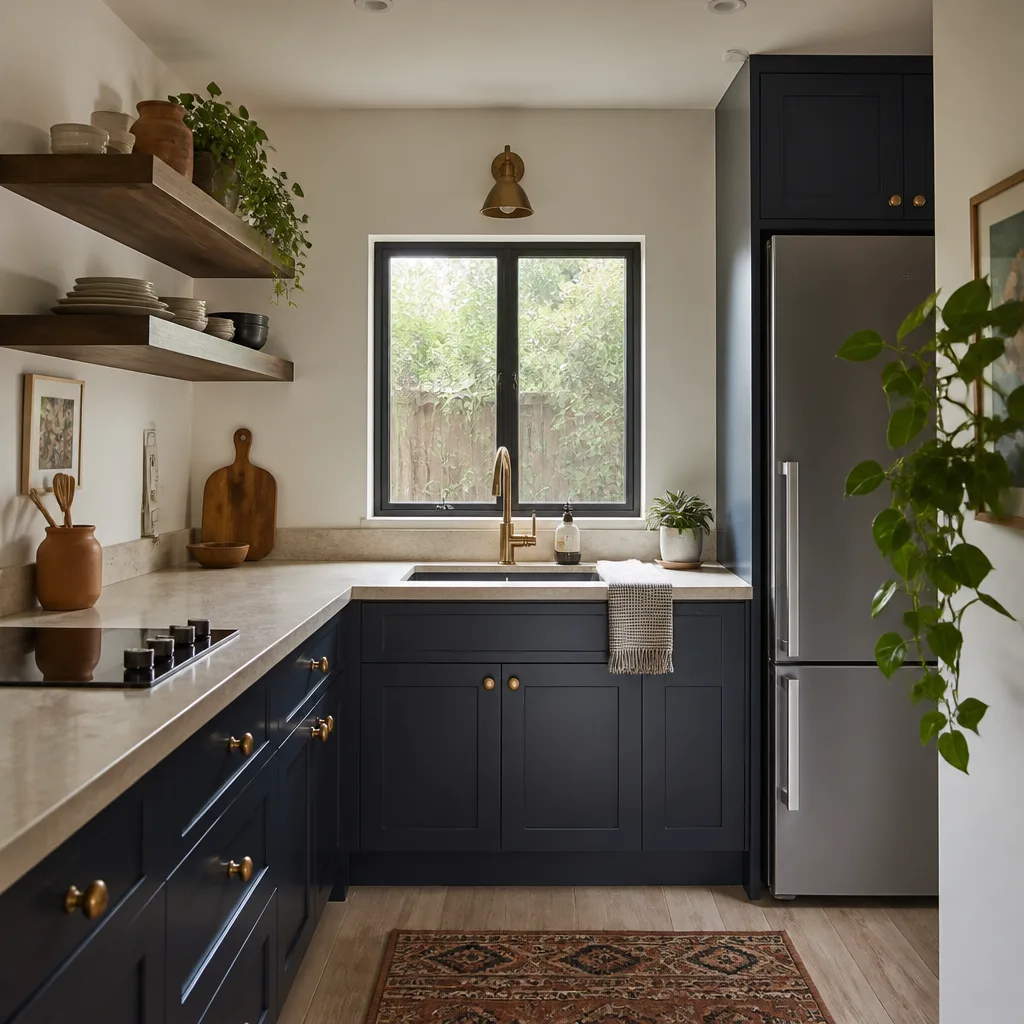
Most San Jose junior ADU conversions built in the last ten years use one of three James Hardie lines: HardiePlank lap siding (the horizontal boards, either 5/16″ or 7/16″ thick), HardiePanel vertical siding (the 4×8 sheets with the smooth or stucco look), or HardieTrim boards (the 1x and 5/4 boards around windows, corners, and the top plate). If your JADU was done as a garage conversion, the original garage siding may actually be older Hardie product that predates the current ColorPlus finish system, and that matters because the paint adhesion and warranty behavior are different.
Here is the compatibility gotcha most owners don’t know: the 7/16″ HardiePlank is not just a thicker version of the 5/16″ board. It has a different lap reveal specification, which means you cannot mix them on the same wall plane without a visible step at the joint and a water-management compromise at the lap. If the original installer used a mix of thicknesses to work around a corner detail or a window, that is where we see failure first in San Jose. We match the exact product, thickness, and reveal. James Hardie does not offer a “fix kit” for this condition, and paint alone will not correct it.
On the OEM-vs-aftermarket decision: for most JADU siding and trim, we recommend staying with genuine James Hardie product. Off-brand fiber cement boards from other manufacturers are not warrantied to perform identically in a color-matched, reveal-matched assembly, and the thermal expansion coefficient differs enough that San Jose’s temperature swings will telegraph the seam lines through the paint within a few years. There are aftermarket options for some accessory pieces like flashing and sealants, and we use quality equivalents there when they outperform the original and cost less. The decision is made per-component, in writing, before we touch the wall.
Signs Your James Hardie Junior ADU Conversion Is Failing
- Caulk lines cracked or pulling away at trim joints. This is the most common early warning in San Jose because the wet winter to dry summer cycle moves HardieTrim more than people expect. The crack lets water sit against the raw edge of the board, and the board starts swelling at the cut end. Cause: wrong sealant type or a joint that was never backer-rodded, so the caulk bond is working against itself.
- Efflorescence (white chalky residue) on the board face below a window. That chalk is mineral salts carried out of the board by water that got in somewhere above and is now traveling down. Cause: a failed or missing head flashing over the window, forcing water into the wall cavity and through the siding.
- Paint peeling in sheets off a specific panel, not fading. Sheet peeling means the board face is saturated and the paint bond is failing from the substrate up. In San Jose we see this most often on the southern exposure where morning dew sits longest. Cause: moisture intrusion behind the panel, usually from a top-course lap that was installed too tight against the roof transition.
- Soft spots or a hollow, dull sound when you tap a HardiePanel sheet. If the panel sounds different from its neighbors, the core has started to break down. HardiePanel should sound dense and consistent. Cause: long-term exposure to a sprinkler overspray pattern or a downspout that dumps against the base of the panel.
- Visible swelling at the bottom edge of planks near grade. The bottom course of HardiePlank must maintain a minimum clearance above grade and horizontal hardscape. If it is sitting in water, it delaminates. Cause: incorrect original install where the bottom course is too close to the concrete or soil, now compounded by San Jose’s winter soil saturation.
Replacement Cost & What’s Included
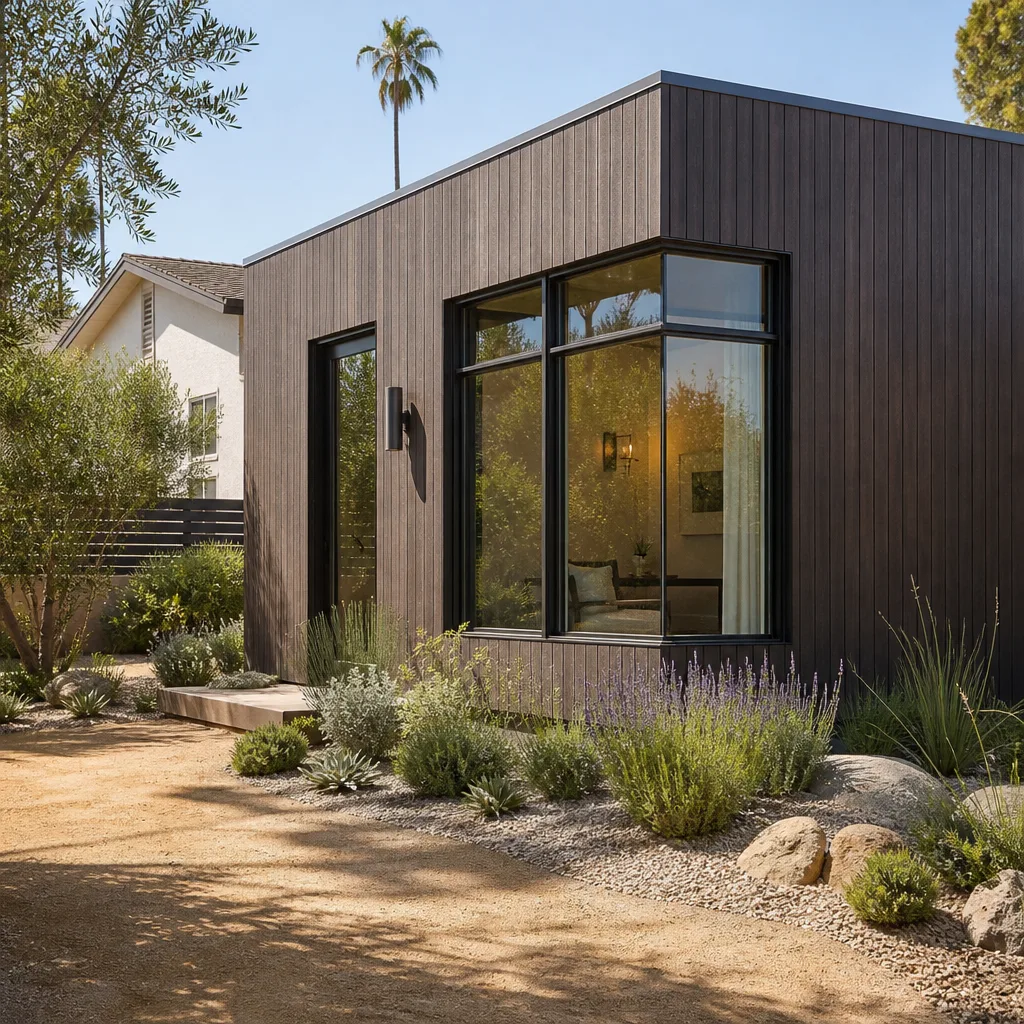
For a San Jose junior ADU conversion with James Hardie siding, trim, or panel replacement, our installed pricing runs from roughly $14 persquare foot for a straightforward lap siding section replacement up to $38 persquare foot when we are also replacing damaged sheathing, correcting flashing, and rebuilding trim returns. A typical single-wall section with failed trim around two windows lands in the $4,500 – $9,500 range. A full re-side of a 400-square-foot garage conversion JADU typically falls between $15,000 and $24,000 before any structural repairs.
Where the range comes from: how much sheathing needs replacement, what the framing looks like once we open it up, and whether the original install left enough clearance for us to correct grade issues without taking down more board than expected. You get a written price before we start, and that number does not move unless we find rot or structural damage behind the siding that changes the scope, in which case we show you photos, tell you the cost, and wait for approval. The work is covered by the Garrison Standard: one full year of written guarantee on workmanship. If something fails in that window, we return and fix it at no charge.
DIY or Call Us?
Fiber cement siding is heavy, brittle, and unforgiving. A full sheet of HardiePanel weighs over 70 pounds, and cutting it produces silica dust that requires a proper respirator, not a paper mask. We have seen homeowners crack a corner off a new HardiePlank board just getting it out of the truck, and that board was $70 before paint. The honest split: you can safely inspect your siding from the ground, photograph what you see, and check your caulk lines. You should not attempt to remove or replace James Hardie product on a junior ADU yourself. The material is not dangerous in the same way a high-tension garage spring is, but the physical handling risk and the real possibility of creating a water intrusion problem that was not there before means the money saved rarely survives the first winter. If you want an honest assessment of what is actually wrong and what it costs to fix, call us at (669) 201-3984. We will tell you if it is a repair or a full re-side, and we will put that in writing.
FAQs
James Hardie siding carries a 30-year non-prorated product warranty, and in San Jose’s climate we typically see 25 – 35 years of service before replacement when the install details are correct, though paint finish typically needs re-coating every 10 – 15 years depending on sun exposure. Siding installed with incorrect clearances or unflashed penetrations can fail in under a decade, which is what we often find in original garage conversions where the work was rushed. Call (669) 201-3984 for an on-site assessment and a written quote.
Yes, in most cases we can replace individual damaged boards or trim pieces, provided the surrounding boards are still sound and we can match the profile, thickness, and color closely enough that the repair is not obvious from the street. The limitation is that a 10-year-old ColorPlus finish has faded from its original tone, so an exact color match on a partial replacement is not always achievable; we will tell you plainly if a full re-paint of that wall is the better call before we touch anything. Call us at (669) 201-3984 for a free estimate and an honest recommendation.
A typical single-wall section with trim replacement takes 1 – 2 working days after we open the wall and confirm what is behind it, and a full re-side of a small JADU usually runs 4 – 7 working days depending on weather and structural findings. We confirm the schedule in writing before work begins and do not bounce between jobs once yours is started. Call (669) 201-3984 to talk through your timeline.
We keep the most common James Hardie profiles on hand in San Jose, including HardiePlank in standard lap reveals and HardieTrim in the widths used on most JADU builds, so typical repairs start without a supply-house run. Non-stock colors and less common profiles get ordered from our local supplier with a 3 – 7 day lead time, and we tell you the lead time in writing before you commit. For a same-week assessment and written quote, call (669) 201-3984.
If your junior ADU is showing signs of siding failure, we are the San Jose crew that puts the fix in writing. Fielding ADU San Jose also works with Abodu, Cover, and Dvele prefab platforms when a full JADU rebuild is on the table, and we match the same James Hardie materials to those builds as well. Run by Reed Calloway out of San Jose, we price the work before we start, build it by the book, and stand behind it for a full year. Put it in writing, show up on time, build it right. Call (669) 201-3984 and ask for Reed.
Written by Reed Calloway, Owner, Fielding ADU San Jose at Fielding ADU San Jose, serving San Jose and nearby areas.