James Hardie Garage Conversion ADU: The San Jose Owner’s Guide
We stock and install James Hardie-compatible siding, trim, and flashing for garage conversion ADUs across San Jose, with most replacement jobs running $1,800 to $6,500 installed depending on the scope. The most common call we get starts the same way: the homeowner notices water staining on the interior drywall, or a corner of the Hardie plank has started to swell and separate at the seam. That’s a panel failure or a flashing failure, and it needs to be addressed before the framing behind it starts to rot.
James Hardie products hold up well in San Jose’s dry summers and wet winters, but they’re not indestructible. The failure points we see most often aren’t the boards themselves. It’s the installation: improper nailing patterns, missing flashing at the transition between the garage door header and the new wall assembly, or caulk that was used where flashing should have been. Reed Calloway has walked enough San Jose garage conversions to know exactly where to look first.
Key Takeaways
- Most James Hardie failures on garage conversions trace back to flashing or fastening errors, not defective product.
- Replacement siding on a conversion ADU in San Jose typically runs $1,800 to $6,500 installed.
- Hardie plank and Hardie panel are not interchangeable, and matching them matters for both appearance and weather resistance.
- We carry common Hardie profiles on our trucks and can order non-stock pieces with short turnaround.
Which James Hardie Models This Applies To
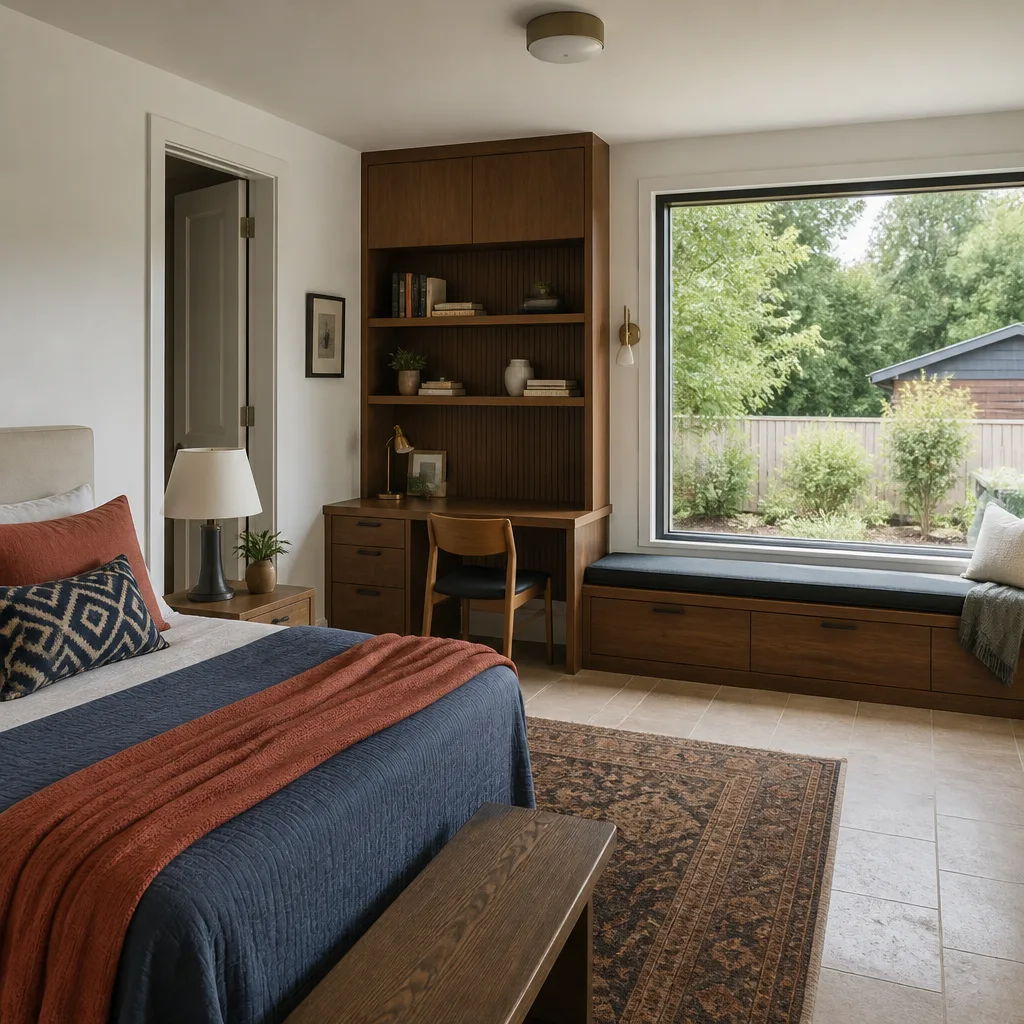
James Hardie makes two primary product lines that show up on San Jose garage conversions: HardiePlank lap siding and HardiePanel vertical siding, plus the HardieTrim boards that finish corners, windows, and door openings. HardiePlank comes in 5/16-inch and 1/4-inch thicknesses. Most residential conversions should use the 5/16-inch product. The thinner 1/4-inch board is still sold for sheds and some accessory structures, and we’ve seen it mistakenly used on conversions where it doesn’t meet local code for the application.
If you’re trying to identify what you have, look for the product code printed on the back of a removed board. HardiePlank codes start with “HZ” followed by a number that indicates the profile, like HZ10 for smooth or HZ5 for cedar texture. The HZ prefix means it’s from the HardieZone system, which is the most current iteration. Older boards without an HZ code are former stock and should be replaced with the matched current equivalent. We can also match by measurement: lap exposure, board width, and texture pattern are enough to identify the right replacement in most cases.
Fielding ADU San Jose is an independent service provider and not affiliated with James Hardie. We install and service their materials because they’re a solid product when installed correctly. When it comes to replacement work, we recommend OEM James Hardie boards rather than aftermarket fiber cement lookalikes. The aftermarket options we’ve tested in San Jose’s sun exposure don’t hold their color consistency as well, and some have slightly different expansion characteristics that show up as hairline cracks at the butt joints within a few seasons.
One compatibility gotcha worth knowing: if your conversion was built in the last five years, you likely have ColorPlus factory-finished boards. ColorPlus colors are proprietary, and off-the-shelf paint matched to the color will not give you the same fade resistance. We order ColorPlus replacements directly so the match is exact, not approximate.
Signs Your James Hardie Garage Conversion ADU Is Failing
- Swelling or buckling at the butt joints: Fiber cement expands and contracts with temperature and moisture. When boards are butt-jointed too tightly with caulk instead of flashing behind the joint, they push against each other and warp or crack. We see this most often on south-facing walls in Willow Glen and Cambrian, where San Jose’s afternoon sun puts real heat load on the siding.
- Water staining on interior drywall near the bottom plate: This means water is getting behind the siding and running down the wall cavity. The usual culprit is missing or incorrectly lapped flashing at the transition where the original garage slab meets the new wall framing. Once the bottom plate stays wet, you’re looking at framing damage, not just a siding fix.
- Chalky residue or fading on the finish: ColorPlus finishes have a long service life, but San Jose’s UV exposure eventually breaks down any factory finish. If you can run a finger across the surface and pick up pigment, the finish is failing. Boards can sometimes be painted to extend service, but if the substrate is cracked or delaminating, replacement is the honest answer.
- Gaps opening at window or door trim: HardieTrim is caulked at these intersections, and caulk is a maintenance item, not a permanent seal. When the gaps open and stay open, water gets behind the trim and into the rough opening. The fix involves removing the trim, replacing any damaged flashing tape, and reinstalling.
- Cracks radiating from fastener points: Hardie products must be fastened with the correct nails to the correct depth. Overdriven nails create stress points that turn into small cracks, which then collect water. We find this on DIY installs and, occasionally, on contractor work that was rushed.
Replacement Cost & What’s Included
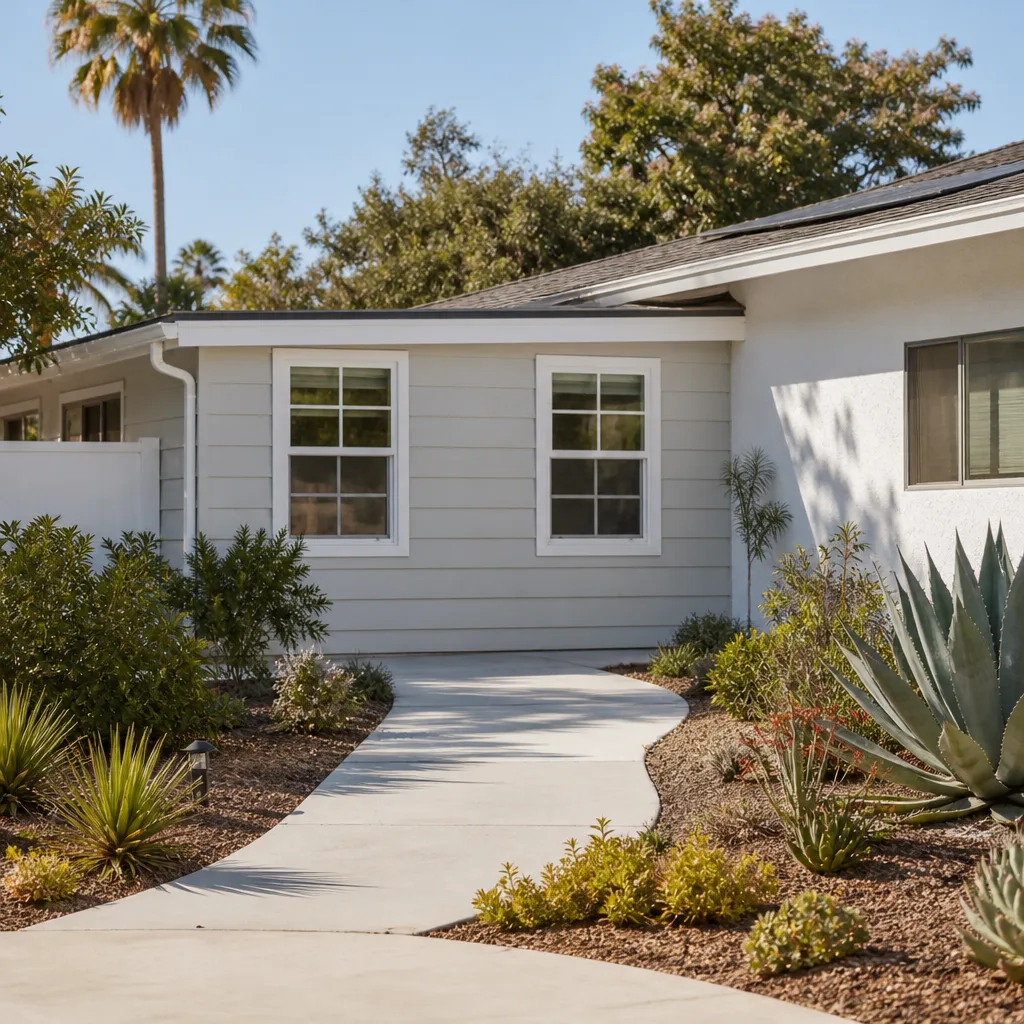
For a typical single-wall replacement on a San Jose garage conversion, you’re looking at $1,800 to $4,200 installed. Full-wraps or jobs involving multiple walls run $4,000 to $6,500. The range comes down to square footage, whether you need ColorPlus factory match or will be painting on site, and how much of the underlying flashing and water-resistive barrier needs replacement once we open the wall up.
Every Fielding ADU San Jose quote is a written price before any work starts. That number includes removal and disposal of the failed boards, inspection of the flashing and water-resistive barrier underneath, replacement of any flashing we find incorrectly installed, installation of the new James Hardie product, and matching trim and caulk at all terminations. No change orders, no “we found more damage” conversations that add thousands to the bill. If we do find additional issues, we document them, show you in person, and quote a separate line item before touching anything else.
The Garrison Standard covers our workmanship for 365 days from completion. If a seam opens, a board fails, or flashing leaks inside that year, we come back and make it right at no charge. The written guarantee spells out what’s covered and how it works, and you get a copy before you sign anything.
DIY or Call Us?
What you can safely do: check your caulk joints every spring and fall, clean the siding with a garden hose and soft brush, and document any areas you’re watching with photos so we can compare over time. If you see a cracked board or a failed joint, mark it with masking tape so it’s easy to find when we arrive.
What we don’t recommend doing yourself: removing and replacing Hardie products involves cutting fiber cement, which produces silica dust that you do not want in your lungs without proper respiratory protection and dust collection. It also requires correct flashing underneath, and silicone caulk is not the fix for a flashing problem. We have the saws, the PPE, the flashing stock, and the experience to do this without creating a bigger opening for water than the one you already have. If you’ve got a failing area that’s smaller than a single board, call us at (669) 201-3984 and describe what you’re seeing. We’ll tell you over the phone whether it’s a wait-and-watch issue or something we should put on the schedule.
Reed’s rule on this one is simple: put it in writing, show up on time, build it right.
FAQs
James Hardie siding, properly installed and flashed, has a service life of 30 to 50 years in San Jose’s climate. The finish typically needs repainting every 10 to 15 years for painted boards, while ColorPlus factory finishes generally hold for 15 to 20 years before they need attention. The most common reason for early failure is not the product; it’s installation errors at flashing and fastener detail.
A cracked or swollen fiber cement board cannot be repaired back to a watertight condition. Caulk or patch compound will fail and let water behind the siding, which turns a board problem into a framing problem. The correct repair is removal of the damaged board, inspection and correction of the flashing behind it, and installation of a matched replacement.
Most single-wall replacement jobs are done in one to two working days, including removal, flashing repair, new siding installation, and trim work. Full-wraps that involve multiple walls or significant flashing replacement typically run three to five working days. We schedule in writing with a start date and a finish date before any work begins.
We carry common HardiePlank lap profiles, HardieTrim boards, flashing stock, and fasteners on our trucks for the standard sizes used on San Jose conversions. Non-standard profiles or ColorPlus factory matches are ordered with short lead times, usually a few days. If you’re not sure what you have, call (669) 201-3984 and describe the board; we can usually identify it over the phone. Estimates for replacement work are free.
Written by Reed Calloway, Owner, Fielding ADU San Jose at Fielding ADU San Jose, serving San Jose and nearby areas.