Last updated October 15, 2026
How to Hire a ADU Contractor in San Jose: A Step-by-Step Guide
In San Jose, an accessory dwelling unit can add $200,000 to $400,000 in market value to a single-family lot, but only when the build is permitted, inspected, and closed out correctly. The California Contractors State License Board processed thousands of consumer complaints last year, and a disproportionate share involved additions and ADUs where the homeowner checked only the price and skipped the vetting. This guide breaks down exactly how to verify a contractor, read a contract, structure payments, and avoid the two skipped steps that cause most ADU failures in San Jose, and you can find more guides & resources on our blog.
Quick Answer
Hiring an ADU contractor in San Jose comes down to verifying the CSLB license classification for ADU work, confirming who pulls the permit and is named on it, getting a fixed written price before work starts, and tying your payment schedule to passed inspections rather than contractor promises. Skip the license verification or accept a cost-plus agreement without a cap, and you’re taking on the exact risks that drive most ADU complaints in this city.
Table of Contents
- Step 1: Verify the CSLB License and Classification
- Step 2: Pin Down Permit Ownership Before You Sign
- Step 3: Understand Fixed-Price vs. Cost-Plus Contracts
- Step 4: Structure the Payment Schedule Around Inspections
- Step 5: Ask About Subcontractor Relationships
- Step 6: Match the Build Method to Your Lot and Budget
- Step 7: Watch for These Red Flags in Bids and Conversations
- Common Mistakes to Avoid
- When to Call a Professional
- Frequently Asked Questions
- The Bottom Line
Step 1: Verify the CSLB License and Classification
The first skipped step is license verification. The CSLB website lets you pull a contractor’s full record in under five minutes. Go to the license check tool, enter the number, and read what comes back. The license must be active, not suspended or expired. The classification matters more than most San Jose homeowners realize. General Building contractors hold a Class B license, which covers new construction including ADUs. Some companies have a Class B-2 specifically for residential remodeling, or a Class B General Building credential. If a company holds only a specialty classification, like C-36 for plumbing or C-10 for electrical, they cannot legally be the prime contractor on an ADU build. They’d be a subcontractor at best, and signing them as your lead puts the permit and the liability on you.
Check the personnel listed on the record. The qualifier is the person who passed the exam and carries the license. If the person you’re talking to isn’t the qualifier, ask who is and whether that person will be on your project. A company can operate with a qualifier who never visits a job site, which is legal but worth knowing. Look also at the insurance and bond status shown on the record. California requires contractors to carry a license bond and workers’ compensation insurance. If either shows as cancelled, walk away. No exceptions.
In San Jose, the city’s Building Division also maintains records of active permits and their status. You can look up the address of any ADU project in the city to confirm a permit was pulled and whether it closed. A contractor who tells you the project doesn’t need a permit is giving you false information. Every attached or detached ADU in San Jose requires permits, including garage conversions under the city’s ADU ordinance.
Step 2: Pin Down Permit Ownership Before You Sign
This is the second most commonly skipped step, and it’s where five-figure mistakes happen. The person named on the building permit is the person legally responsible for the work. If your contractor pulls the permit under their license, they own it. If you pull it as an owner-builder, you own it, and you also own the liability for code corrections, job site injuries, and failed inspections.
Ask this exact question in writing: “Who will be named on the permit, and are you pulling it under your license number?” The answer should be immediate and clear. A licensed contractor pulling the permit under their own license signals that they’re taking responsibility for the build. A contractor who asks you to pull the permit as an owner-builder is shifting legal and financial risk onto you. There are legitimate owner-builder situations, but they’re rare for ADU work in San Jose, and they typically involve a homeowner who wants to act as their own general contractor.
Permit ownership also drives a practical detail: who shows up when the inspector fails a rough-in. If the permit is in your name, you’re the one who gets the correction notice and has to chase the fix. If the permit is in the contractor’s name, the correction is their problem to solve. The Garrison Code structures this simply: the permit is pulled by the licensed contractor, the work is done by the book, and final inspection is passed before the job is closed out.
Step 3: Understand Fixed-Price vs. Cost-Plus Contracts
A fixed-price contract means you agree on a number before the work starts, and that number is what you pay when the work is finished correctly. Every line item, every material allowance, every labor hour is priced up front. A cost-plus contract means you pay the actual costs of labor and materials, plus a percentage for the contractor. Cost-plus is not inherently dishonest, but it shifts risk to you. If material prices climb or the job runs long, your final number climbs with it.
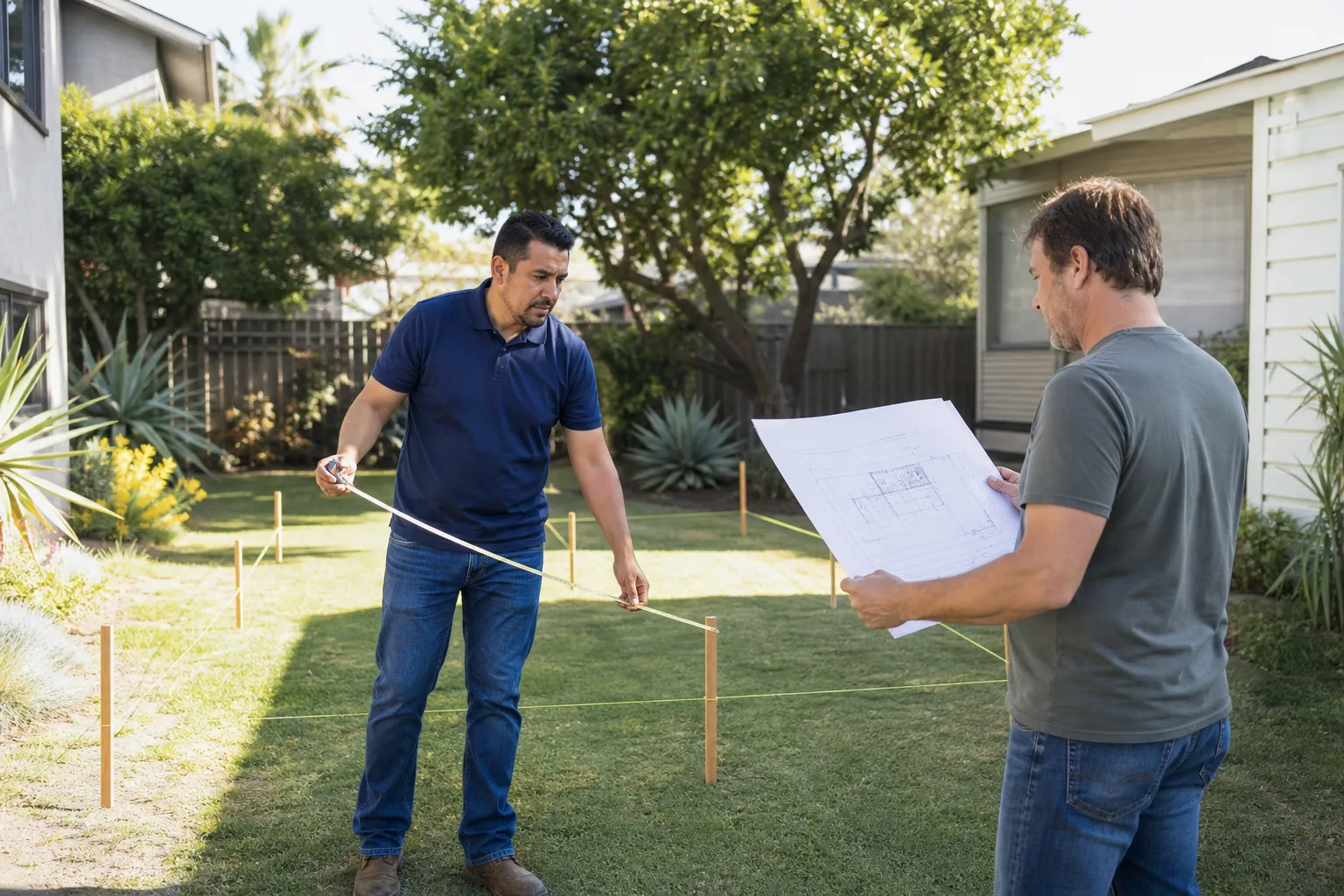
For an ADU in San Jose, fixed-price is the standard that protects the homeowner. The written price should include all permit fees, city fees, plan sets, engineering if required, materials, labor, and the contractor’s overhead and profit. Nothing should be “to be determined later.” A legitimate fixed-price ADU contract will identify every allowance, every scope item, and every exclusion. If the contract says “allowance” for something, ask for that allowance number. A written price from Fielding ADU San Jose home includes the full scope in writing before any work begins. No change orders, no moving the number at the door.
Cost-plus agreements have a place in large commercial work or owner-driven custom builds where the scope genuinely can’t be pinned down. A detached 600-square-foot ADU in San Jose is not that project. The scope is knowable, and a contractor who can’t price it up front either lacks the experience or wants to keep the number soft.
Step 4: Structure the Payment Schedule Around Inspections
A contractor who asks for 50 percent down before plans are drawn is asking you to fund their last job. The payment schedule should track completed, inspected work. Here’s a workable structure for a San Jose ADU:
- Deposit: 10 percent at contract signing, enough to lock a start date and cover plan review coordination.
- Plan and permit milestones: 15 percent when plans are submitted to the city and the permit is issued.
- Foundation and rough framing: 20 percent after the foundation and framing pass inspection.
- Rough mechanicals: 20 percent after plumbing, electrical, and HVAC rough-ins pass inspection.
- Drywall, finishes, and fixtures: 20 percent at substantial completion before final walkthrough.
- Final payment: 15 percent after final inspection passes and the certificate of occupancy is issued.
The exact percentages can shift, but the principle doesn’t: you pay for work that has been done and inspected, not for promises. In San Jose, where ADU construction can run four to nine months depending on the build method, that discipline is the difference between a project that stays on schedule and one that drifts. A contractor who insists on early payment tied to “mobilization” or “upfront materials” without a corresponding deliverable should prompt a direct conversation.
Step 5: Ask About Subcontractor Relationships
An ADU is a coordinated build. Foundation, framing, roofing, electrical, plumbing, insulation, drywall, finishes. No single crew does all of it, so the question is not whether the contractor uses subcontractors but who they are and how long the relationships have been in place. A ADU Builders in San Jose with a stable subcontractor bench in the city will have electricians who know San Jose’s inspection culture, plumbers who’ve pulled permits through the city’s online portal, and crews who show up on schedule because they want the next job from the same GC.
Ask about the relationship in plain terms. How long have you worked with your electrician? Do your subs pull their own permits for their scope? Are they licensed and insured on their own credential, or covered under your umbrella? The answer tells you whether you’re hiring a general contractor or a guy with a phone and a tape measure. In San Jose, where the talent market is competitive and a bad sub can delay a project by six weeks, the strength of these relationships directly affects your finish date. When Fielding ADU Builders runs a garage conversion or room addition, the subs are checked, the credential is current, and the crew on your site is background-checked and uniformed, as detailed in our Room Addition Contractor Maintenance Checklist for San Jose Homeowners. You know exactly who is on your property.
Step 6: Match the Build Method to Your Lot and Budget
San Jose lots vary more than most homeowners assume. A flat, wide lot in Willow Glen can take a 1,200-square-foot detached prefab with minimal site work. A narrow lot in Naglee Park might need a custom stick-built design to clear the rear setback. An empty two-car garage in Evergreen can be converted with a lighter budget, while a sloped lot in Almaden Valley needs grading and foundation work that changes the math entirely.
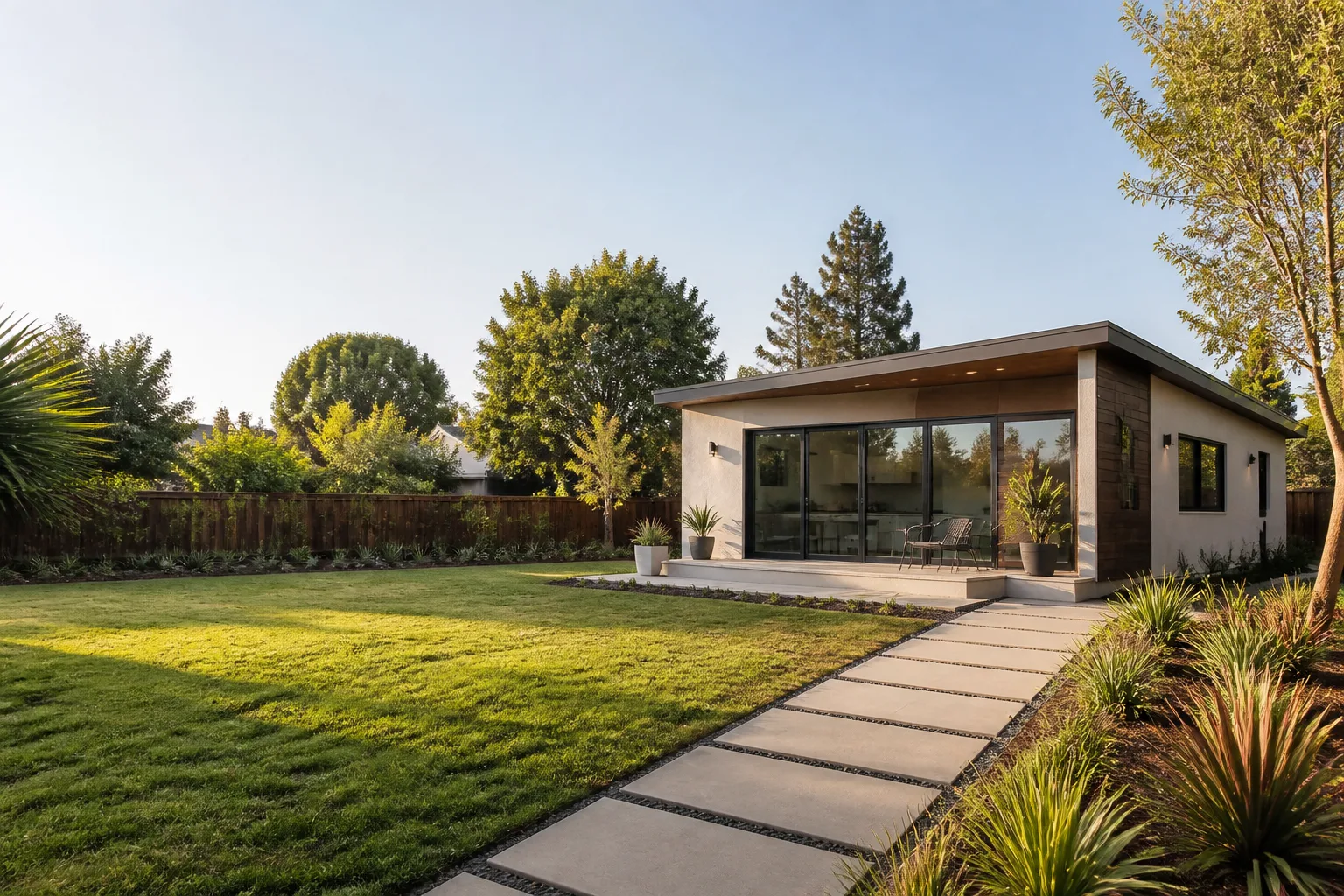
The build method should follow the lot and the budget, not the other way around. Familiarity with the real options matters. Prefab and modular platforms like Abodu and Plant Prefab deliver factory-built modules with tighter timeframes but less flexibility on custom floor plans. Tuff Shed-style structures can work as a shell for a detached ADU if the conversion is permitted and insulated properly. Conventional builds using James Hardie siding and standard framing give the most design control but take the longest. A contractor who only knows one method will push you into it even when another makes more sense for your property. Ask which methods the contractor actually builds with, how many they’ve completed in San Jose, and which one they’d recommend for your lot size, soil type, and setback distance. The answer should be a conversation, not a pitch.
Step 7: Watch for These Red Flags in Bids and Conversations
The homeowners we hear from after a bad experience usually say the same thing: the signs were there at the beginning. Here are the specific red flags to watch for in San Jose when you’re comparing bids:
- No CSLB license number printed on the bid. It’s required by law and its absence means the bid is informal at best and unlicensed at worst.
- A bid that’s 30 percent below the next one. Low bids aren’t gifts. They’re an estimate missing scope. Someone is paying for that gap later, either through change orders or incomplete work.
- Vagueness about permits. If the contractor says they can “start right away and handle permits later,” that’s unlicensed behavior. San Jose requires permits before any ADU work begins.
- A promise to finish in 60 days. San Jose ADU timelines run longer than that for almost every build method. A promise that aggressive means either the contractor doesn’t know the city’s review timeline or they’re lying to win the job.
- Pressure to sign the same day. A legitimate fixed-price ADU contract takes time to write. Anyone pushing for a signature before you’ve had a night to read the document is not operating the way a responsible contractor operates.
Every one of these points is checkable. A contractor who responds well to your verification requests is a contractor who has nothing to hide. Fielding ADU Builders puts its price in writing before any work starts, names the permit-holder, and backs the finished project with the Garrison Standard: a written one-year guarantee covering workmanship defects. If something fails within 365 days, we return at no charge. No exceptions, no fine print.
Common Mistakes to Avoid
- Hiring the first contractor who returns your call. ADU demand in San Jose is high, and responsiveness is not competence. Verify the license, check the record, and get three written bids.
- Accepting a verbal estimate as a contract. A number said out loud is not a price. Get it in writing, with the scope itemized, before you pay a dollar.
- Paying large upfront percentages without a milestone. Your money should track inspected work. A 50 percent deposit before plans are drawn is a red flag, not a standard practice.
- Skipping the owner-builder conversation. If your contractor asks you to pull the permit, understand exactly what liability you’re accepting. For most San Jose homeowners, this is a dealbreaker.
- Choosing based on price alone. The cheapest bid on a San Jose ADU is often the bid with the most expensive omissions. Read the scope line by line.
- Ignoring the subcontractor question. The sub who frames your walls and wires your panel matters as much as the contractor who signs the contract. Ask who will be on your site and whether they’re licensed on their own credential.
- Signing a cost-plus contract without a cap. If you go cost-plus, set a not-to-exceed number in writing. Without it, you’re underwriting every overrun with no limit.
When to Call a Professional
Call a professional ADU contractor when you have a clear scope and want a written price, not a conversation about possibilities. Call when you’ve already been burned once and need a builder who will name the permit-holder, itemize the scope, and put the guarantee on paper. Call when you’re weighing a garage conversion against a detached ADU in San Jose and want straight answers about cost per square foot, timeline, and which method fits your lot. Call when the thought of managing five different subcontractors and a city permit portal is more than you want on your plate. Garage Conversion Contractor in San Jose work benefits from the same discipline: written price, permitted build, inspected close. Fielding ADU San Jose offers free estimates in San Jose – call (669) 201-3984 and a live person answers, day or night.
Frequently Asked Questions
An ADU contractor in San Jose needs a California Class B General Building license, which authorizes the holder to take prime contracts on new residential construction including accessory dwelling units. Specialty classifications like C-36 or C-10 are limited to their trade and cannot legally serve as the prime contractor on an ADU. Verify the classification on the CSLB website using the contractor’s license number.
ADU construction in San Jose typically runs $350 to $550 per square foot for a conventional build, meaning a 500-square-foot detached unit lands between $175,000 and $275,000 before permit fees, which add $10,000 to $25,000 depending on the scope. For a deeper look at pricing, see our ADU Cost Breakdown: The San Jose Homeowner’s Reference for 2026. Garage conversions run lower, between $120,000 and $200,000 for a standard two-car conversion. Prefab options with Abodu or Plant Prefab can shift the cost structure toward factory labor and shorter on-site timelines, but site work, foundation, and utility connections remain local costs. Call (669) 201-3984 for a written estimate on your specific lot – estimates are free.
Yes, every garage conversion to an ADU in San Jose requires building permits, including electrical, plumbing, and insulation upgrades to bring the space to residential code. The city’s ADU ordinance allows conversions on owner-occupied properties, but the permit process is mandatory. A contractor who says otherwise is not being straight with you.
The person named on the permit is responsible for corrections if the project fails final inspection. If your contractor pulled the permit under their license, they own the correction and the cost. If you pulled it as an owner-builder, you own it. That’s why permit ownership is one of the two questions to ask and answer before you sign.
Prefab ADUs from companies like Abodu or Plant Prefab can cut on-site construction time and give you a known, factory-tested product, but they require a flat, accessible lot and a foundation that works with their module dimensions. A custom build gives you more flexibility on a narrow or sloped San Jose lot and lets you integrate the unit with existing architecture. The right answer depends on your lot, your setback distance, and your budget. A contractor fluent in both methods will tell you which fits.
Plan review in San Jose takes six to twelve weeks depending on city workload. Construction then runs four to eight months for a conventional build, and slightly less for a prefab module once site work is done. Budget eight to fourteen months from signed contract to final inspection for a permitted, inspected ADU. Anyone promising 60 days is not telling you the truth about the city’s process. Call (669) 201-3984 to talk about specifics for your property.
The Bottom Line
Hiring an ADU contractor in San Jose is a vetting process that comes down to two steps most homeowners skip: verifying the license record, and pinning down permit ownership before signing. Write the price down. Tie payment to inspections. Ask who will be on your site. The right contractor answers every question directly and puts everything on paper. The wrong one has a reason not to. San Jose’s ADU market rewards homeowners who ask sharp questions and check what they’re told. If you want a Room Addition Contractor in San Jose who operates that way, the Garrison Standard is simple: show up in the window, price in writing, by the book, leave it clean, stand behind it for a year. Call (669) 201-3984 for a free estimate and a written price before any work starts.
Written by Reed Calloway, Owner at Fielding ADU San Jose, serving San Jose since 2006.