Last updated October 15, 2026
ADU Permits, Codes & Inspections in CA: What You Need to Know
California passed more than a dozen ADU laws in the last eight years with one stated goal: strip cities of their power to say no. The state now mandates that San Jose approve a compliant ADU application within 60 days. But “compliant” does the heavy lifting in that sentence. We see applications come back corrected week after week because a contractor submitted for the state standard and ignored the municipal overlay San Jose stacks on top. This guide and our The Complete Guide to ADU in San Jose explain the gap between what Sacramento guarantees and what a San Jose plan checker actually enforces, so you walk into the permit office knowing which standard you’re being held to.
Quick Answer
California state law sets minimum ADU standards every city must accept, including a 60-day approval clock and reduced parking and setback rules. San Jose adds its own design standards, utility connection fees, school impact fees, and fire sprinkler triggers that can still delay or condition a permit. The practical path is to design for the stricter of the two standards from day one, then track your application through San Jose’s online permit portal and prepare for the three inspection stages: foundation, framing, and final. For help deciding who should handle that design work, see our DIY vs Professional ADU: The San Jose Homeowner’s Decision Guide.
Table of Contents
- What California State Law Actually Guarantees You
- The San Jose Overlay: What the City Still Controls
- What Permits and Fees Actually Cost in San Jose
- How the Three-Stage Inspection Sequence Works in San Jose
- Why Unpermitted ADU Work Creates a Title Problem
- How to Read a San Jose Permit Status Online
- Prefab and Modular ADUs: A Different Permit Path
- Common Mistakes to Avoid
- When to Call a Professional
- Frequently Asked Questions
- The Bottom Line
What California State Law Actually Guarantees You
California’s ADU statute package is the strongest in the country, and it was written specifically to override local foot-dragging. Three bills matter most, and each one removed a specific tool from a city’s toolbox.
AB 68 (2020) forced cities to approve or deny an ADU application within 60 days and eliminated owner-occupancy requirements statewide. Before AB 68, a San Jose homeowner could be told they had to live on the property to build an ADU. That requirement is gone, and the clock is real: if the city misses the 60-day window, the application is deemed approved by operation of law.
AB 2221 (2022) closed loopholes cities were using to slow-walk applications. It prohibited cities from demanding a new utility connection for an ADU served by the primary home’s water, sewer, or electrical panels, and it barred them from requiring replacement parking when a garage is converted to an ADU. It also set minimum ADU height limits that override local rules.
SB 897 (2023) extended the state’s preemption further: no city can impose a front setback greater than four feet for an attached ADU, no city can require covered parking for an ADU, and no city can cap ADU size below the state’s 1,000-square-foot minimum for a two-bedroom unit on a single-family lot.
What these laws share is a ceiling on local authority. San Jose cannot say a detached ADU is incompatible with a single-family neighborhood. It cannot require you to add a parking space when you convert your garage. It cannot require a minimum lot size. Those fights are over, and the state won them on your behalf.
But the laws also share a silence. They set minimums and maximums, but they do not write your plans, they do not run your utility calculations, and they do not stand in the room when a San Jose inspector walks your foundation forms. That’s where the municipal overlay begins.
The San Jose Overlay: What the City Still Controls
San Jose complies with state ADU law, but the city still writes design standards that determine what your ADU looks like from the street, and it still collects fees that define what the project costs. We’ve built enough ADUs in San Jose to know exactly where the friction points sit, and they are not the ones the state addressed.
Design standards. San Jose restricts ADU exterior finishes to match or complement the primary residence. You cannot wrap your ADU in a material that clashes with the main house, even if the state allows the square footage. Roof pitch, window proportions, and trim details all get plan-checked against a compatibility standard. The state guarantees you can build; San Jose decides whether it looks like it belongs.
Utility connection fees. AB 2221 stopped cities from demanding new utility connections when the primary home’s service can handle the load. But San Jose still collects development impact fees for new ADUs, including a sewer connection charge and a water service charge. These are not discretionary; they are in the fee schedule, and they are due at permit issuance.
School impact fees. San Jose collects Santa Clara Unified School District fees on new ADUs over 750 square feet. The state exempts ADUs under 750 square feet from school fees, but build a two-bedroom ADU at 800 square feet and the fee appears. It’s a line item most contractors don’t mention until the permit is ready for pickup.
Fire sprinkler triggers. The state does not require fire sprinklers in a detached ADU if the primary home does not have them. San Jose enforces this consistently, but the trigger changes when your ADU is attached, when it’s over a garage, or when your lot has limited fire access. If the primary home has sprinklers, the ADU gets them, full stop. That’s a five-figure add some homeowners don’t see coming.
The practical takeaway: you are building to two rulebooks at once. Fielding ADU San Jose prices every ADU with the San Jose overlay already in the estimate because removing it later is how budgets break. Our written price includes the fees San Jose will actually charge, not the fees a state brochure implies you’ll skip.
What Permits and Fees Actually Cost in San Jose
ADU permit and fee costs in San Jose run in a predictable band, and you should know the band before you sign anything. Here’s what a detached 750-square-foot, one-bedroom ADU looks like in our written estimates:
| Fee Item | Typical Range | Notes |
|---|---|---|
| Building permit | $3,500 – $6,000 | Based on valuation; San Jose uses a cost-per-square-foot schedule |
| Plan check | $1,000 – $2,500 | Multiple rounds can push this up |
| Sewer connection fee | $1,800 – $3,200 | Flat fee per new ADU unit |
| Water service fee | $900 – $1,600 | Depends on meter size |
| School impact fee | $0 – $2,100 | Only if ADU exceeds 750 sq ft |
| Fire sprinkler system | $4,000 – $9,000 | Only if triggered by primary home or attachment |
| Inspection fees | $800 – $1,500 | Bundled in permit or charged per reinspection |
Total permit and fee costs for a typical San Jose detached ADU land between $12,000 and $24,000 before any construction begins. That’s the honest number, and it’s the number that should be in your written price on day one.
One thing a homeowner should ask: does the contractor’s quote include all city fees, or are fees “paid by owner at permit pickup”? Many San Jose bids leave fees out and let them land on you later. The Garrison Standard, which Fielding ADU San Jose works under, requires the written price to include every dollar the city will charge, so the number you approve is the number on the final invoice.
How the Three-Stage Inspection Sequence Works in San Jose
San Jose requires three main inspections on a conventional ADU build. Each stage has a specific pass/fail profile, and knowing what fails each stage saves you weeks of rescheduling. Here’s the sequence we walk every ADU through:
Stage 1: Foundation
The foundation inspection happens after forms are set and rebar is tied, before concrete is poured. The inspector checks form dimensions against the approved plan, rebar size and spacing, anchor bolt placement, and the plumbing rough-in below the slab. In our experience, foundation failures in San Jose are usually rebar clearance issues or missing anchor bolts at hold-down locations. Fixing this after concrete is poured means jackhammering, so we book the inspector before the concrete truck, always.
Stage 2: Framing
The framing inspection covers the skeleton: stud spacing, header sizing, shear wall nailing patterns, hold-down hardware, roof structure, and the window and door rough openings. This is the stage where the San Jose overlay shows up hardest, because the inspector is checking your approved plan line by line. A change made in the field without a revised plan is an automatic correction. We submit revisions before we frame, not after.
Stage 3: Final
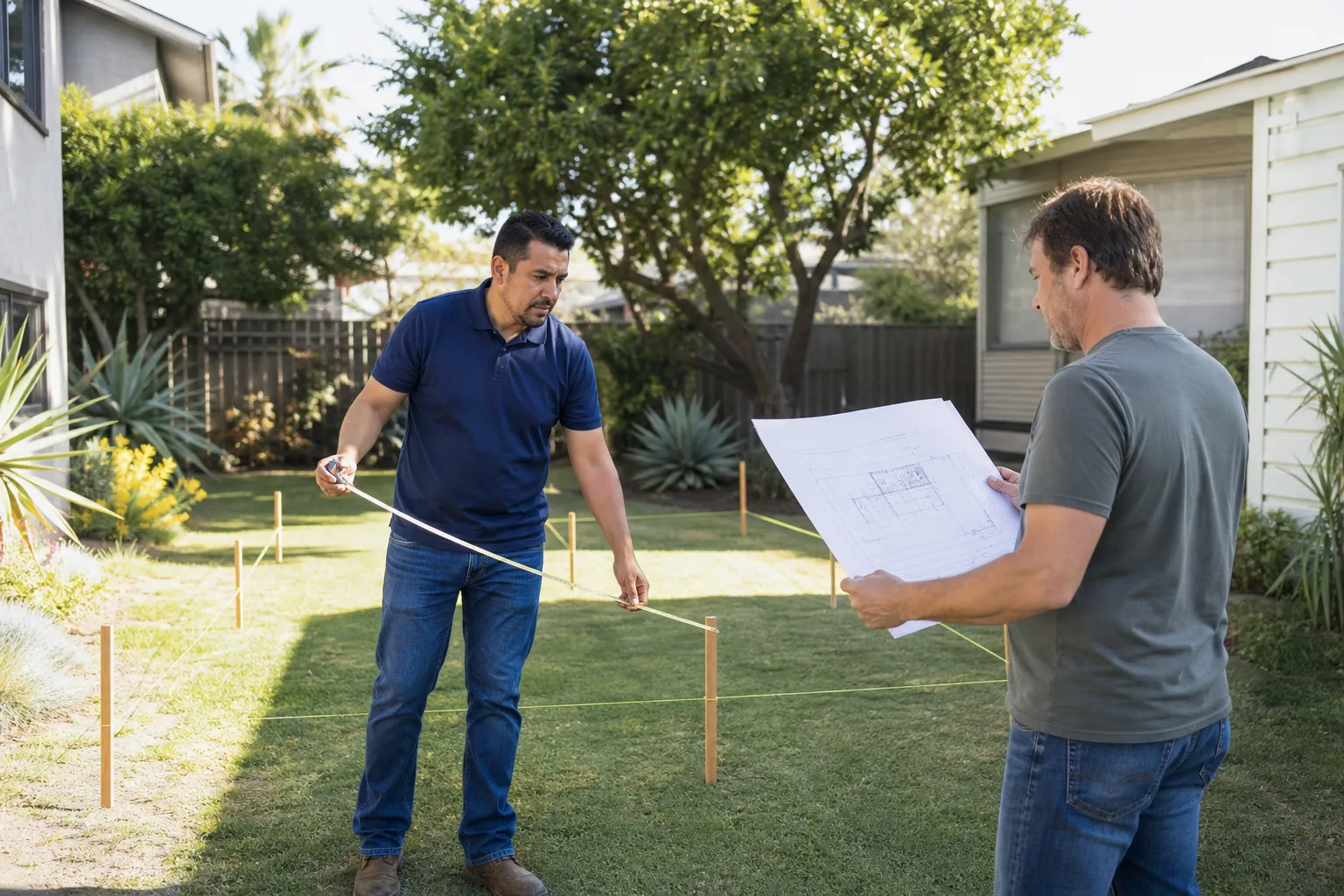
The final inspection confirms the ADU is habitable: electrical panel and GFCI placement, water heater strapping, smoke and carbon monoxide detectors, egress windows, insulation certificate, and the fire sprinkler test if sprinklers were installed. San Jose final inspectors check the property line setbacks with a measuring tape, not a plan sheet. If the ADU sits two inches too close to the fence, you are digging and moving a building. Fielding ADU San Jose surveys the setback before we set forms to make sure the final inspection is a formality, not a negotiation.
Why Unpermitted ADU Work Creates a Title Problem
The most expensive ADU problem in San Jose is not a failed inspection. It’s an unpermitted ADU discovered during a sale or refinance, a scenario we detail in ADU Warning Signs: A San Jose Homeowner’s Reference Guide. Here’s how it unfolds.
When you sell a home, the seller disclosure statement asks whether all improvements were made with permits. If you answer yes and the city’s records show no permit, you have committed nondisclosure, and the buyer can rescind the sale or sue after closing. If you answer no, the buyer’s lender often refuses to finance the unpermitted square footage, which means the buyer’s loan falls through or the square footage gets excluded from the appraisal. Either way, the transaction dies or the price drops.
Refinancing triggers the same scrutiny. An appraiser measures the home and compares it to public records. Unpermitted square footage gets flagged, and the underwriter will not lend against space the city never inspected. The ADU you built to add value becomes the reason you cannot access the equity you built it for.
The fix is a retroactive permit, and San Jose will issue one: the city calls it a “permit after the fact.” But you will pay penalty fees on top of the normal permit fees, and you will open walls to let an inspector verify the framing, electrical, and plumbing were done correctly. If they were not, you are rebuilding, not legalizing. Every dollar saved by skipping the permit becomes a dollar owed later, with interest.
This is why Fielding ADU San Jose builds nothing without a permit. It is not a preference. It’s the only way a building appraises, finances, and sells clean. The Garrison Code puts it plainly: build by the book, or don’t bid the job.
How to Read a San Jose Permit Status Online
San Jose runs its permits through the SJ Permits portal, and any homeowner can look up their application in about three minutes. The status field is the source of more confusion than any other part of the process, so here’s a plain-language decoder:
- “Submitted” means the city has your application in the queue. Nothing has been reviewed. No clock has started.
- “In Review” means a plan checker has the file. The 60-day state clock starts here if your application was complete at submission.
- “Corrections Required” means the plan checker found problems and sent the file back. The 60-day clock pauses. This is the status most contractors don’t mention to the homeowner until weeks have passed.
- “Approved” means the plans passed plan check. You can pull the permit and start construction. The inspections begin after this.
- “Approved with Conditions” means the plans passed, but the city attached written conditions you must meet before the permit is released or before final inspection. Conditions in San Jose typically include utility fee payment, fire department review for sprinklers, or a landscaping covenant for street-facing ADUs. Read every condition. They are enforceable.
- “Permit Issued” means the permit is active and the job has a green tag at the site. Inspections get scheduled from this point.
The status you want to avoid is “Corrections Required” sitting there for a month while your contractor works another job. Ask for the correction list in writing within 48 hours of the status change. A disciplined contractor reads the corrections the same day they post.
Prefab and Modular ADUs: A Different Permit Path
Prefab ADUs change the permit conversation because the unit itself has already been reviewed. When we build with a platform like Abodu or Plant Prefab, the design, structural engineering, and seismic detailing are pre-approved by the state through a third-party review program. The city’s job shifts from reviewing the entire structure to reviewing the site: foundation, utility connections, setback verification, and fire access. That is a faster review and fewer corrections rounds.
But faster is not automatic. San Jose still applies its design standards to prefab units, and some factory finishes don’t pass the compatibility check on the first submission. We’ve matched homeowners to the prefab path when speed to occupancy matters and the lot is straightforward; we lean conventional, often with James Hardie siding, when the site has slope, tight setbacks, or a design review trigger. Both paths need the same inspections: foundation, connections, and final. Prefab just removes the framing inspection because the framing was inspected at the factory.
The lesson for a San Jose homeowner is to pick a builder who works both paths. If a contractor only knows slab-on-grade stick framing, they’ll sell you a conventional build whether it’s the right choice or not. Fielding ADU San Jose runs conventional and prefab projects side by side, and our written estimate spells out which method we’re proposing and why it fits your lot.
Common Mistakes to Avoid
- Designing for state minimums and forgetting the San Jose overlay. State law allows what state law allows, but San Jose plan check enforces compatibility, fees, and sprinkler triggers that the state doesn’t mention. Submit for the stricter standard the first time.
- Starting construction before the permit is issued. Some San Jose contractors pour the foundation on an “approved” plan and worry about the permit later. If the permit comes back with conditions, you’ve built on a foundation the city hasn’t released, and corrections after concrete are not cheap.
- Leaving city fees out of the written quote. A $20,000 ADU quote that excludes the $14,000 in sewer, water, school, and permit fees is not a $20,000 ADU. Demand a written price that includes every dollar the city will charge.
- Ignoring the correction list. Corrections Required is not a rejection; it’s a to-do list. But it has a shelf life. A contractor who lets corrections sit for a month is adding that month directly to your move-in date.
- Building an ADU without a permit to save money. The permit is the cheapest part of the project. The retroactive permit, the penalty fees, the wall openings, and the sale or refinance problem cost more than the permit ever did.
- Using a contractor who can’t read the San Jose online portal. Every status change matters. If your contractor doesn’t check the portal and can’t explain what “approved with conditions” means on your specific file, you’re flying blind on your own project.
When to Call a Professional
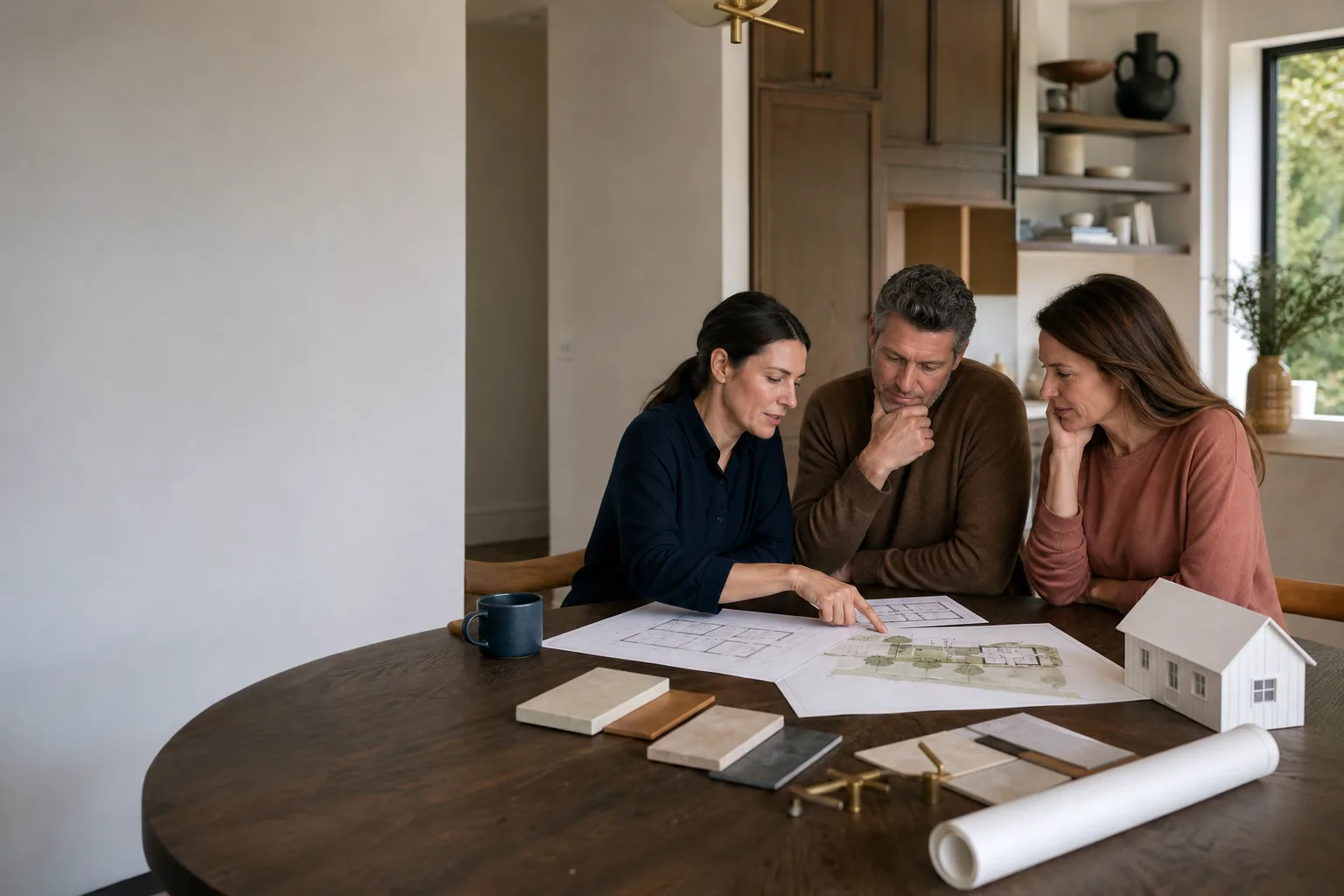
There are three moments when a San Jose homeowner should stop reading and pick up the phone. First, if you’ve received a correction list you don’t fully understand, because every correction not answered becomes a delay, and delays compound. Second, if you’ve discovered an unpermitted ADU on a property you own or are buying, because the path to legalization involves opening walls and meeting current code, not just writing a check. Third, if you’re weighing prefab against conventional construction on a specific lot, because the right answer depends on setback measurements, utility placement, and the design review that applies to your street. Fielding ADU San Jose offers free estimates in San Jose, and the estimate includes the written price and the permit path before you commit to anything. Call (669) 201-3984.
Frequently Asked Questions
California requires San Jose to approve or deny a complete ADU application within 60 days. In practice, plan check on a conventional ADU takes 6 to 10 weeks if corrections are answered promptly, and permit issuance follows within 2 weeks of paying fees. Prefab ADUs can move faster because the structural review is already done. Call (669) 201-3984 for a timeline based on your specific project.
Building permit fees for a typical San Jose ADU run $3,500 to $6,000, plan check adds $1,000 to $2,500, and sewer, water, and school fees can add another $2,700 to $6,900 depending on unit size. Total permit and city fee costs usually land between $12,000 and $24,000. Fielding ADU San Jose includes every fee in its written price.
San Jose cannot deny a permit for an ADU that meets state requirements, which is exactly why the state wrote the law this way. What San Jose can do is send your application back with corrections and conditions. The denial is never final on a compliant design; the delay is the tool, and answering corrections fast is the only way to beat it.
No, not unless your primary home already has fire sprinklers, or the ADU is attached to the primary home, or it sits in a fire access zone that triggers the requirement. When sprinklers are required, they add $4,000 to $9,000 to the project. A plan checker will tell you within the first two weeks whether the trigger applies to your lot.
Yes. Unpermitted square footage gets flagged during appraisal, lender underwriting often refuses to finance it, and the seller disclosure requirements make nondisclosure legally risky. The ADU becomes a liability rather than an asset. The fix is a retroactive permit with penalty fees and invasive inspections.
Yes. San Jose accepts prefab ADUs from manufacturers like Abodu and Plant Prefab under the state’s pre-approved plan program. The city still reviews the site foundation, utilities, setbacks, and design compatibility, but the structural review is shorter. Prefab works best on flat, accessible lots; a sloped lot may favor conventional framing.
The Bottom Line
California ADU law gives San Jose homeowners rights no previous generation had: a 60-day approval clock, no parking replacement for garage conversions, no owner-occupancy requirement, and reduced setback rules. San Jose still controls the details that cost money and time: design compatibility, utility and school fees, sprinkler triggers, and the inspection sequence. Build to the stricter standard, track your permit status online, answer corrections within days, and never build without a permit. For more guides & resources on ADU planning in San Jose, explore our blog. The permit is not a hurdle; it’s the only path to an ADU that appraises, finances, insures, and sells.
Call (669) 201-3984 to schedule a free estimate. Fielding ADU San Jose puts the written price in front of you before any work starts, including every permit and city fee, and stands behind the build for a full year under The Garrison Standard.
Written by Reed Calloway, Owner at Fielding ADU San Jose, serving San Jose since 2006.