Last updated October 15, 2026
DIY vs Professional ADU: The San Jose Homeowner’s Decision Guide
Most San Jose homeowners who attempt a DIY accessory dwelling unit are not undone by a lack of carpentry skill. They are undone by paperwork. Santa Clara County issues thousands of ADU permits a year, and a meaningful share of the owner-builder permits end with a failed inspection, a lapsed permit, or a sale that stalls because of a disclosure form the seller didn’t know existed. This guide walks through the real decision points: permit liability, inspection exposure, actual cost differences, and the five specific tasks where doing it yourself actually makes sense in San Jose.
Quick Answer
For most San Jose homeowners, hiring a licensed ADU contractor in San Jose is the safer financial decision, because California Civil Code § 1102.6c requires owner-builders to disclose their status to any buyer for ten years. The owner-builder route can save 15% to 25% on paper, but the savings shrink or disappear once you account for permit extension fees, failed inspections, and the market discount a five-year disclosure can create at resale. A narrow set of finish tasks, painting and trim and fixture installation, let a hands-on homeowner save real money without touching permit liability.
Table of Contents
- What California’s Owner-Builder Permit Actually Permits
- The Five Inspection Stages Where Your License Status Matters
- Real Cost Comparison: Owner-Builder Savings vs. Hidden Fees
- The Owner-Builder Disclosure: What It Means for Refinancing and Resale in San Jose
- The Narrow Set of ADU Tasks Where DIY Actually Saves Money
- Prefab, Modular, and Conventional Builds: Where DIY Fits and Where It Doesn’t
- Common Mistakes to Avoid
- When to Call a Professional
- Frequently Asked Questions
- The Bottom Line
What California’s Owner-Builder Permit Actually Permits
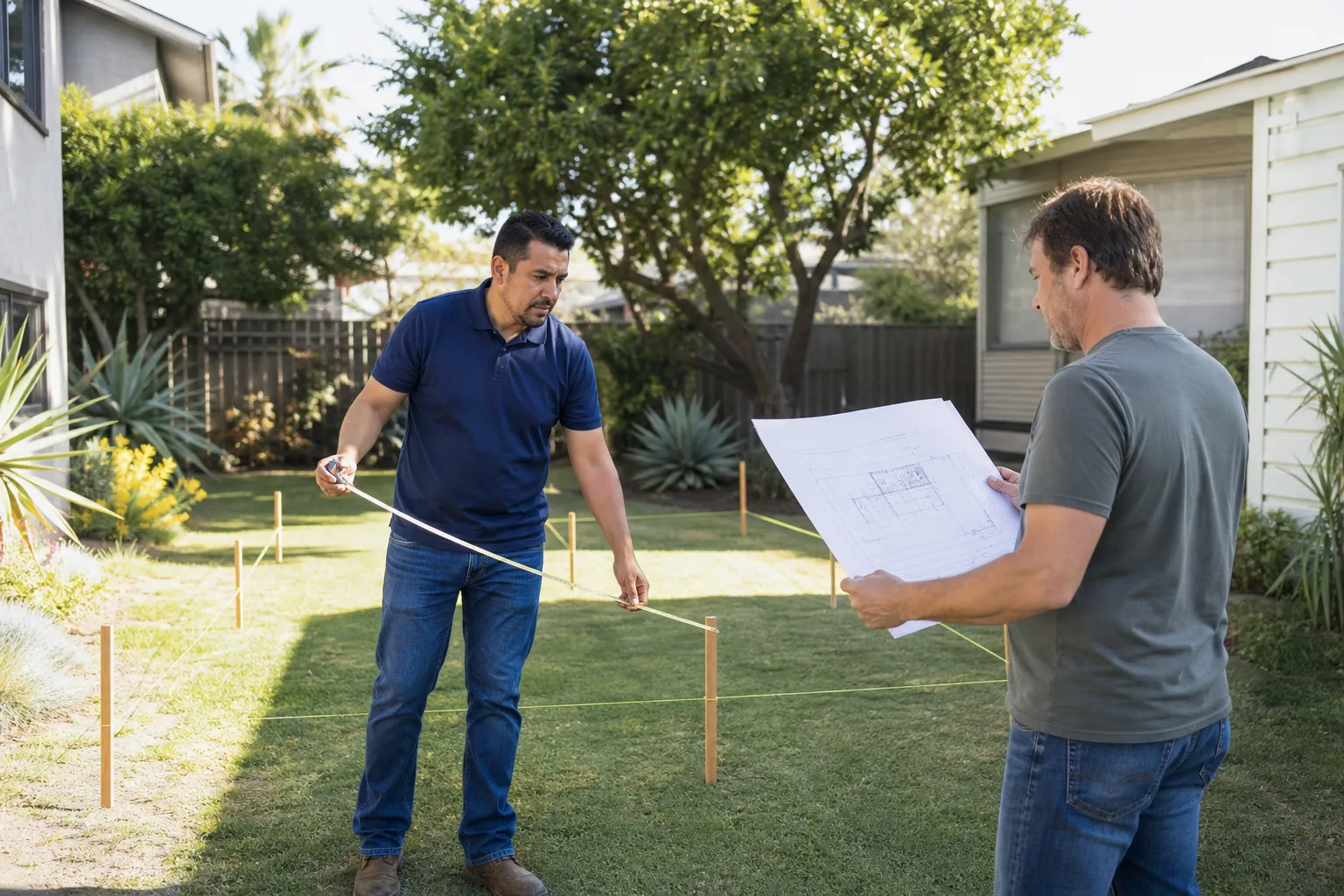
An owner-builder permit in San Jose does exactly what the name says: it allows a person who owns and occupies the property to act as the general contractor on their own ADU project. You pull the permit. You schedule the inspections. You hire the subcontractors. And you carry the liability.
Here is where most homeowners get into trouble, because the legal boundary of “owner-builder” is narrower than YouTube suggests.
Under California law, an owner-builder can hire licensed subcontractors to perform the actual work. What an owner-builder cannot do is hire unlicensed workers to perform work that requires a contractor’s license, and cannot act as a contractor for someone else. The rule that trips people up: if you hire a handyman, or a friend, or a “guy who knows framing” who is not a licensed contractor, and you pay them for structural work, you are not acting as an owner-builder. You are acting as an unlicensed contractor. The State Contractors Board treats that differently, and the City of San Jose’s building department follows the state’s lead.
San Jose’s ADU ordinance, revised in 2020 to comply with state ADU mandates, also requires owner-builder permits to be tied to the owner’s name, not a business entity, unless the owner is the qualifying individual on the license. That matters at inspection time and at resale, which we’ll get to below.
The practical version: an owner-builder permit allows you to manage the project. It does not excuse you from building code, from workers’ compensation requirements if you hire anyone, or from California’s contractor licensing laws. We’ve had San Jose homeowners call us after the permit was pulled and ask us to take over a half-finished owner-builder project-something our maintenance checklist approach helps us assess quickly. Taking over is possible, but it always costs more than starting clean, because we have to inspect and often correct work that was never checked mid-stream.
The Five Inspection Stages Where Your License Status Matters
San Jose’s building inspections for ADUs run through five primary stages, and each one tests something different. A professional contractor’s license changes the dynamic at every single one, not because the inspector plays favorites, but because a licensed contractor carries insurance, bond, and a documented history of passing the same inspections hundreds of times.
- Foundation inspection. Before concrete is poured, the inspector checks the forms, the rebar, the setbacks, and the excavation. An owner-builder who doesn’t know how far the rebar needs to sit from the edge of the form, or what the minimum footing depth is for San Jose’s expansive soil zones, gets a correction notice and a reinspection fee. A licensed contractor’s crew has laid this out the same way every day, and the inspector knows that.
- Framing inspection. The inspector looks at stud spacing, shear wall nailing patterns, hold-down hardware, and roof truss connections. This is where owner-builders fail most often. The code is specific, and a single missed hold-down can trigger a correction that requires an engineer’s letter, not just a nail.
- Rough-in inspection. Plumbing, electrical, and mechanical rough-in all happen before drywall. Here is where the subcontractor hiring rules above get tested: San Jose inspectors will look for work performed by unlicensed parties, especially electrical and plumbing. If the work was done by someone without a license, the correction can extend beyond the work itself.
- Insulation and drywall inspection. The inspector verifies insulation values, fire blocking, and the sealing of penetrations. Fewer safety stakes here, but a missed fireblock is a reinspection fee and another week of schedule delay.
- Final inspection. The inspector checks everything: exits, smoke and carbon monoxide alarms, GFCI protection, stair railings, the whole occupancy checklist. This is the inspection that gets an owner-builder a certificate of occupancy, or a correction list that resets the clock.
Each reinspection in San Jose carries a fee, and permit extension fees add up if the project runs past the original permit window. A professional at ADU Builders in San Jose manages this process as a routine part of the job. An owner-builder learns it as they go, at the cost of time and reinspection fees.
Real Cost Comparison: Owner-Builder Savings vs. Hidden Fees
The honest savings number for an owner-builder ADU in San Jose is 15% to 25% of the contract value. On a $250,000 conventional ADU, that’s $37,500 to $62,500. The number is real. The question is what it costs to earn it.
Here’s the comparison, using San Jose’s current market prices for a 500-square-foot one-bedroom ADU, conventional stick-built with James Hardie siding:
- General contractor markup: A licensed GC typically charges 15% to 25% overhead and profit on an ADU. That’s the savings pool. On $250,000, that’s $37,500 to $62,500.
- Your time as project manager: An ADU build runs five to nine months in San Jose from permit to occupancy. A realistic owner-builder commitment is 10 to 15 hours per week. At a San Jose professional’s wage of $60 to $90 per hour, that’s $600 to $1,350 per week of your time. Over six months, $15,600 to $35,100 in sweat equity, not counting stress.
- Reinspection fees: San Jose charges from around $150 to $400 per reinspection, depending on the trade. Owner-builder projects average two to four failed inspections. That’s $300 to $1,600. A professional crew averages near zero, because the work is checked before the inspector arrives.
- Permit extension fees: If the project stalls past the permit’s expiration, San Jose requires a permit extension or a new permit. Extensions run in the hundreds of dollars, but a lapsed permit that requires a new submittal can cost $1,000 to $3,000 in re-review and re-drawing fees.
- Correction and rework: This is the wild card. A failed framing inspection that requires an engineer’s stamped correction letter costs $800 to $2,500 for the letter alone, plus the carpentry to fix the mistake. Owner-builders who skip a mid-project engineering check often find this one at final inspection.
- Financing costs: If your construction loan requires a licensed general contractor, the owner-builder route may not qualify. Even if it does, lenders often extend less and inspect more. The rate difference on an ADU construction loan, or the difficulty refinancing after an owner-builder project, can be thousands of dollars.
The clean way to state it: owner-builder savings are real but conditional. They survive only if every inspection passes on the first or second try, the schedule holds, no subcontractor disappears mid-job, and you don’t price your own hours. We have seen all four fail on the same project. It’s not rare.
The Owner-Builder Disclosure: What It Means for Refinancing and Resale in San Jose
Here is the part most YouTube tutorials leave out entirely.
California Civil Code § 1102.6c requires that any seller who performed work under an owner-builder permit disclose that fact, in writing, to any prospective buyer. The disclosure obligation runs for ten years from the completion of construction. On the standard California Residential Purchase Agreement, the seller must check the box. There is no way around it, and failing to disclose is fraud.
What does that box do in San Jose’s market?
San Jose ADU homes sell at a measurable premium right now. A permitted ADU adds $200,000 to $400,000 of value depending on the neighborhood, the quality of the build, and whether the ADU is a detached unit or a garage conversion. Buyers in Almaden Valley, Willow Glen, and Cambrian specifically ask for turnkey ADUs as rental units or multigenerational housing. They are comparing ADU homes side by side.
When a buyer sees the owner-builder disclosure box checked, the negotiation changes. The buyer’s agent will ask who performed the electrical. The buyer’s inspector will look harder at the panel, the foundation, the roof connection. The buyer’s lender may condition the loan on a structural inspection or a contractor’s letter, particularly for an ADU built in the last five years. In our experience at Fielding ADU San Jose, we have seen owner-builder ADU homes sell, and we have seen them fall out of escrow, but we have never seen the disclosure speed up a sale. It always adds a question.
Refinancing carries the same exposure. A lender underwriting a cash-out refi on a home with an owner-builder ADU will examine the permit history, request photos of the work, and sometimes require a licensed contractor’s inspection report. If you built the ADU yourself and are now asking the bank to lend against its value, the bank asks questions that a licensed contractor’s record would already have answered.
The practical advice: if you build as an owner-builder, keep every permit document, every subcontractor license number, every invoice, every inspection sign-off, and every photo of every stage. You will need them at sale or refinance. If you hire a licensed contractor, that documentation exists as a matter of course.
The Narrow Set of ADU Tasks Where DIY Actually Saves Money
None of this means a homeowner should stand back and write checks. There are specific ADU tasks where doing the work yourself saves real money, and none of them put you in the owner-builder permit box.
- Interior painting. Painting the ADU interior is a finish task, not a permit task. San Jose painters charge $3 to $6 per square foot for walls and trim. A 500-square-foot ADU can run $3,000 to $6,000 inside. Paint, tape, and a weekend saves most of that.
- Demolition of a non-load-bearing interior space. If you are converting a garage or finishing an existing room and the demo is limited to drywall, flooring, and cabinetry, not structural framing, a homeowner can handle it with a dumpster rental and two weekends.
- Fixture installation. Swapping in plumbing fixtures, vanity, faucets, and lighting kits after rough-in is done and the permit is signed off, or as part of a punch list under a contractor’s permit, is a reasonable DIY task. It should be done after the final inspection or listed in the contract as homeowner-furnished.
- Landscaping and exterior finish. Gravel paths, decomposed granite, planter boxes, bark mulch, pavers over sand. These tasks sit outside the permit scope and outside the structural envelope. San Jose’s drought-tolerant landscaping rebates can even pay for some of it.
- Site cleanup and staging. A construction site produces debris continuously. If you manage the dumpster, sweep the site, and keep materials organized during the build, you save a contractor’s clean-up labor without touching a single permit document.
The common thread: none of these tasks require a permit, none of them fall under the owner-builder disclosure, and none of them create structural or electrical liability. A smart homeowner does these, and hires a licensed contractor for the parts that count.
Prefab, Modular, and Conventional Builds: Where DIY Fits and Where It Doesn’t
San Jose homeowners researching ADUs today are typically comparing three paths: a prefab unit from a company like Abodu or Cover, a panelized or modular build from a company like Dvele, or a conventional stick-built ADU with something like James Hardie siding. Each path changes the DIY calculus.
Prefab ADUs from Abodu or Cover. These companies deliver a primarily factory-built unit and handle the site foundation, utility connections, and final assembly. The homeowner’s DIY opportunity is limited to site preparation, landscaping, and sometimes interior paint, which suits a homeowner who wants the price and schedule certainty of prefab without taking on construction management. The permit and engineering come from the prefab company’s own documentation. The rationale for owner-builder status here is weak, since the prefab company already manages the build.
Panelized or modular ADUs from Dvele or similar firms. The unit arrives as large panels or modules that a crew assembles on site over a few weeks. This is fundamentally a licensed contractor’s job. The crane work, the panel connections, the weatherproofing details all require trained crews. A homeowner who wants to help can paint or landscape, but the build itself is no more DIY-able than a conventional frame.
Conventional stick-built with James Hardie siding. This is the traditional route, and it’s where the owner-builder question arises most often, because the process is physically visible and the temptation to save the GC markup is strongest. It’s also the route with the most inspection exposure, the most subcontractor coordination, and the longest schedule. If you’re going to build this way and you’re not a licensed contractor, the financial case for owner-builder gets thin fast in San Jose.
We work with Abodu, Cover, Dvele, and James Hardie products as a Room Addition Contractor in San Jose, so we see the same decision from homeowners every week. The homeowners who ask the best questions are the ones comparing the real landed cost of each method against their own schedule and skill.
Common Mistakes to Avoid
- Pulling an owner-builder permit because a YouTube video made it look easy. The permit itself is the easy part. The liability and the disclosure are the hard part. Most tutorials stop at the nail gun.
- Hiring unlicensed subcontractors for plumbing and electrical. This is the single most expensive mistake we see. In San Jose, a red-tagged rough-in from unlicensed work requires a licensed contractor to open, correct, and re-cover the work, which can cost more than hiring the licensed trade from the start.
- Ignoring San Jose’s setback and height rules for detached ADUs. San Jose allows detached ADUs up to 850 square feet, but setbacks vary by zone, and some neighborhoods carry additional design review overlays. Missing the setback rule means either a variance application or a smaller ADU, and both cost money.
- Failing to budget for permit extension fees. Owner-builder projects in San Jose run over schedule more often than contractor-run projects, not because homeowners are lazy, but because they are coordinating trades for the first time. A 30% schedule buffer is the bare minimum.
- Forgetting the owner-builder disclosure when selling. This is not a paperwork formality. Failing to disclose is actionable fraud, and even a proper disclosure can drop your buyer pool. If you build as an owner-builder, plan to own the home for at least five more years.
- Mixing DIY electrical work with a contractor’s permit. Some homeowners ask to do their own electrical under a contractor’s permit. A licensed contractor cannot legally do that, and no contractor who holds a license will agree to it. The permit belongs to the contractor, not the homeowner.
When to Call a Professional
Call a licensed contractor if your ADU involves any structural work: foundation, framing, shear walls, roof ties, or overhead beams. Call if the project requires a new electrical subpanel or gas line work, which it almost certainly does. Call if you plan to refinance or sell within the next five years, because the owner-builder disclosure will cost you more than the GC markup in most San Jose negotiations. Call if your lot has any complexity: a slope, a creek setback, a heritage tree, a utility easement, or a shared property line. Fielding ADU San Jose offers free estimates in San Jose – call (669) 201-3984.
Frequently Asked Questions
A conventional detached ADU in San Jose runs $220,000 to $350,000, while a garage conversion runs $120,000 to $200,000, and a prefab ADU from Abodu or Cover lands in the $180,000 to $280,000 range including site work. These are before permit fees, which run $5,000 to $15,000 in San Jose depending on the scope. Call (669) 201-3984 for a written price on your specific lot – estimates are free.
Yes, San Jose issues owner-builder permits for ADUs, but California law requires you to disclose that status to any buyer for ten years, and you must hire licensed subcontractors for licensed trades. For more guides & resources on navigating these requirements, see our blog. The build itself also has to meet the same code as a contractor’s build. For most homeowners, the permit is legal but the liability is not worth the savings.
Plan on six to nine months from design to occupancy for a conventional ADU in San Jose, and four to seven months for a prefab ADU, assuming the permit review goes smoothly. San Jose’s planning department has cleared its ADU permit backlog significantly since 2021, but utility connections from PG&E can still add six to ten weeks.
Yes, and San Jose specifically requires garage conversions to replace the lost parking space unless the property is within a half-mile of transit, in which case parking replacement may be waived. Our Garage Conversion Contractor in San Jose page covers the specific parking requirements.
It depends on the quality of the build and the inspector’s review, but appraisers do flag owner-builder work more often, especially if the permit history is incomplete or the building department noted corrections. The market value can be the same, but the appraisal risk and the buyer objection risk both run higher.
The Garrison Standard, the standard Fielding ADU San Jose holds itself to inside the Garrison Partners family, is a written promise: a price in writing before any work starts, permitted work done by the book, a background-checked uniformed crew on site, and a one-year written guarantee on workmanship. If something fails inside that year, we come back and correct it at no charge. The guarantee is on paper, not verbal.
The Bottom Line
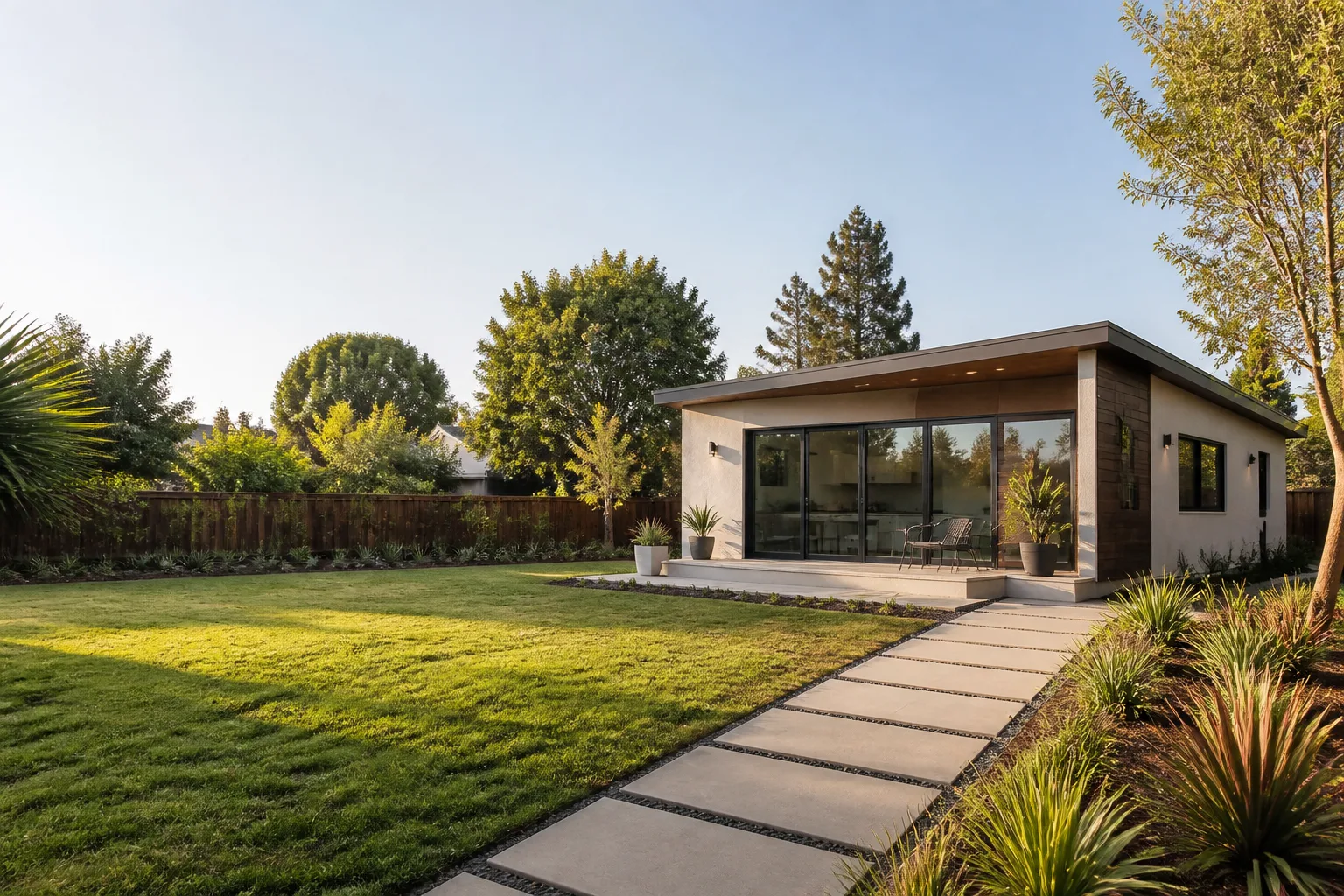
For most San Jose homeowners, hiring a licensed ADU contractor is cheaper than the owner-builder route once you price your own hours, your failed inspections, your permit extension fees, and the resale question the owner-builder disclosure creates. The DIY savings that survive are finish tasks: paint, trim, fixtures after final inspection, landscaping, and site cleanup. The part of the ADU that matters, the structure, the electrical, the plumbing, the permit record, belongs with a licensed crew. Fielding ADU San Jose writes the price down before any work starts, builds to The Garrison Standard, and stands behind the work in writing for a full year. Call (669) 201-3984 for a free estimate on your ADU in San Jose.
Written by Reed Calloway, Owner at Fielding ADU San Jose, serving San Jose since 2006.